Wednesday, 14 July 2010

Vikings, Dragons and Arabs

I wrote this probably over a month ago, but I intended it to go here so go here it will.

_____________________
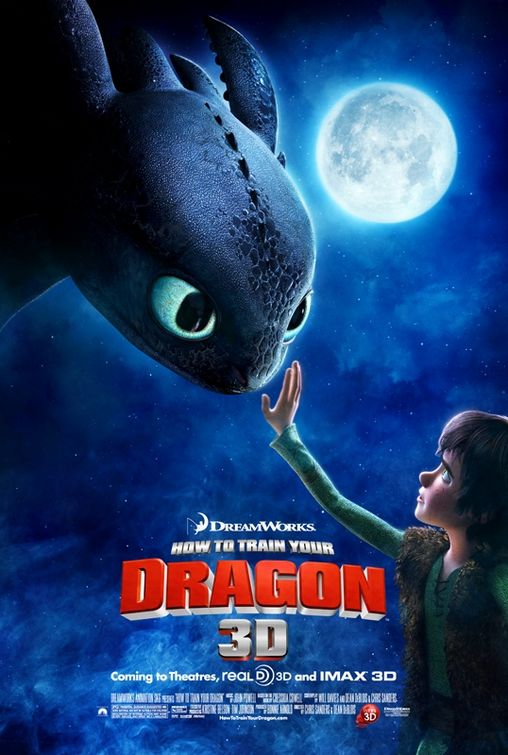


So I've just seen this film, and I'm kind of bowled over by how perfectly it seems to encapsulate my new general political attitude. Properly speaking, it is another one of these familiar exercises in bland, knee-jerk liberalism, but somehow it still managed to strike a chord with me, and even to seem to pertain specifically to the Israeli-Palestinian conflict.

This is a really good film, and I hereby formally dispatch you to watch it, but I'm going to talk about it freely, without worrying about spoiling things. Mainly because this movie proceeds in precisely the way you'd expect it to - its plot's not the attraction - but here you are warned anyway. SPOILERS ahoy.


How to Train Your Dragon tells the story of Hiccup, young Viking boy in a village regularly ransacked by dragons. Hiccup can't quite get his Viking thing going. He's small and clumsy and generally inadequate in terms of dragon-hunting macho-macho-man-ness, and when he more or less accidentally comes across a wounded dragon and gradually makes his acquaintance, he begins to have second thoughts about the attitude he's supposed to have towards these creatures. 

So yeah, we've already seen this story anywhere from Pocahontas through Shrek to Avatar, and often in sharper terms, but this movie seemed to highlight for me in a much more powerful way the ideology, collective passion, and societal convention that facilitate and enflame this kind of stubborn, hate-filled, and mind-bogglingly blind aggression.

To reiterate the point I've been making and this film has been strongly implying possibly without fully realising it - nationalism is a disease. It poisons our psyche and corrupts our souls, divides us into tribes and has us see monsters where humans exist. Usually deeply flawed humans - often humans with whom we've shared a checkered past and that we have good cause to be wary of - but humans towards whom having a poisoned, hysterical and demonising attitude contributes absolutely nothing at all.


Before I go on conjecturing and allegorising this film out of all proportion, I want to mention a scene: Enraged Viking village leader Dad tells exposed-as-traitorous-dragon-fraterniser Hiccup "You are not a Viking. You are not my son."

Yes, unpleasant, and the pain is what this scene's mainly about. But, there's an obvious implication many (most?) people even in the genuinely advanced Western World don't see here; you don't have to continue being Jewish any more than you have to become a carbon copy of your father. These are things you are born into, and that your surroundings would be glad to see you carrying on, but, with respect, fuck the surroundings. Fact of the matter is I'm not my dad, and even less than that am I my "people" and their history. Nothing wrong with either of them, but contrary to popular confusion, they are quite simply entities that are distinct from me. They just are. I didn't promise anybody to be my dad and I didn't promise anybody to be Jewish. These things are too important to be determined at birth, and the fact is they aren't. They are artificially preserved by social constructs, because society is fucking stupid when it's not very carefully engineered not to be.

The truth is Hiccup isn't a Viking, and neither is he is father's son the way that marauding explosion of violence intends. The movie takes both these sentiments back later on in the proceedings, but it is a kids film after all. Part of the tragedy of real life is that sometimes your surroundings can't deal with who you are and what you're not. The confrontation can be ugly, but it's unavoidable if you ever want to truly "break out" - step out of the shadow of your predecessors and come into your own.


There's more to this, though, than just fulfilling your individuality. As bland as the message is, it's not really obvious, at least not in Israel. When you tell an Israeli we don't have to be at war with the Arabs you're likely to get much the same reaction as a Viking's when you tell him there could be peace with the dragons. Both of the conflicts didn't just spring out of thin air. In both it is somewhat counterintuitive to learn which of the parties is responsible for by far the greater amount of devastation and death. Both the Vikings and the Israelis are fighting what is at its core a war of self-defence, but they're doing it so zealously, so excessively, that they begin to lose both their moral compass and their ability to think straight about their own interests.

The most potent bit of symbolism in the movie, which appears to have been created more or less by accident and to serve for plot rather than thematic purposes, has to do with how the conflict was created:

The dragons live in a large cave. Down in its depths lives a kind of quasi-queen - a titanic, astronomical beast that makes all the others look like flies. When the dragons don't feed it stolen produce or livestock, it eats them. The movie implies that only together can the Vikings and dragons stop it, but before that it briefly toys with the idea (being a kids movie, again) of the catastrophical consequences the premature and frankly unnecessary rousing of this largely pacified giant might have.

This works for both sides of the long-going war. If we're not careful - if we keep on with these superfluous violent, repressive, and brutal adventures - we could awaken the rage of the humiliated post-colonialist Arab and Muslim world that originally started this conflict to such a level it will no longer be possible to hold it back and prevent a full-blown psychotic culture-war. The effort of "deterrence", though doubtless working, is also bringing the bad blood constantly closer to its boiling point. We are playing with fire.

Conversely - and this is more a dangerous musing than an actual opinion - the giant that is Israel has in many ways already been awakened. At the end of the movie the dragons join forces with the humans to kill this huge beast despite it being one of them, because (presumably), though just like them it is only acting in self-preservation, it is simply causing too much damage. Now, I am not disputing Israel's claim of always acting ultimately in the interests of self-defence, but as well as being a nuclear power Israel is the world's fourth largest exporter of arms, so what does that mean? I'd like to think that all of Israel's destructive international (non-Arab-related) behaviour is the result of evil, callous individuals whose actions weren't truly necessary for Israel, but what I'm worried about is this - what if they were? That's not a rhetorical question. I don't know what to think about this.

What I do know is that tribal identification is irrelevant. I don't think you can really start seriously thinking about these things without that.

Thursday, 27 May 2010

Religion is Clinical Depression

When I walk into a classroom, or a bus, or a cinema, I avert my eyes from the people already seated. Like a nun.

Timidity. It's not exactly fear - you don't expect a negative reaction - you just feel a need to keep to yourself, to stay out of people's way. Like it's part of being okay.

Nietzsche characterises religion's submission and innate shame culture (in the paraphrases I've read of him) as the downtrodden's resentment and outrage at their situation directed inwardly. From a common sense historical and psychological perspective this seems plausible, but what's more noteworthy and more unequivocal is that this is also a a widely accepted and from my experience accurate characterisation of clinical depression.

Whether this was how and why religion was formed or not, this is the expression of the "organised" religious experience today. It's about finding faults in yourself and redemption in what's outside you. This "slave morality" as Nietzsche calls it, extends beyond the content of out interaction with people and into its style. The true religious devotee sees himself as basically inadequate, and approaches all in life with humble trepidation, like a scared nun.


I am resentful. I am outraged. It's not as simple for me as for the truly enslaved to find my oppressors, and it's far from certain that they exist to the extent that I imagine them, but I channel all this rage almost directly into my timidity. Force of habit, I figure. A little like channelling religion's fervour and revolutionary passion into conservatism and insularity and abstention from things that are for ridiculously irrelevant reasons considered bad. Angry?; Shut up.

The "master morality", which I keep fiddling around with on this blog and pronouncing bombastically about without implementing, would have me walk into a room surveying all its occupants as if they were more or less my minions. This doesn't actually require disrespect. It requires cheek, which isn't quite the same thing. It requires a basic approach of "bring it".

Are you a man or a nun Arthur Pewty?

Tuesday, 25 May 2010

Agnon and Nietzsche on Enthusiasm and Religion (respectively)


Two things I have come across today that excited me were texts. The first is translated by me and the second is randomly plucked from the internet, with me unfortunately having to translate from my own Hebrew translation the last sentence.

S. Y. Agnon seems to me pretty much the epitome of untranslatability, so possibly this will not work, but we'll consider it a challenge and experiment. From his "Oath of Allegiance", this passage is about Reknitz, an Austro-Hungarian marine botanist recently arrived in early 20th century Jaffa. I can think of very few things less exciting than botany, so it's kind of awesome to me how he can't. Have at you:


"Every day he would go out and take what the ocean gave him, and if the time was right he would hire a dinghy, and the attendant Ichyeh would mediate between him and the Arab dinghy owners, and he'd set out to sea and say let's sail to the place where Adam's forebears lived. And holding in his hands a brand of fishing net and iron instruments, he would draw out a host of algae that do not reach the surface, his heart thumping like a hunter pursuing his prey.

Never had Reknitz gotten seasick; to the contrary - the mysteries of the ocean, the wonders of creation would give him strength and fortitude. Burgeon these plants inside the sea, like gardens of bloom, like thickets of bush, like a grove shaded in the water, and their eye like the eye of the yellow sulphur; like crimson; like the living flesh; like ivory pearls; like the eye of the olive; like corals; like the peacock's feathers; cleaved to the crags and rocks and cliffs.

From fondness of the sea and love of its plants he'd call it my orchard, my vineyard, and other such names of affection. And coming back from the sea he'd wash his algae in sweet water, to take out the salt - salt that bloats and enlarges - and lay them down on a flat plate. Anybody seeing him tending to his weeds will think he is preparing a salad for himself to eat, while Reknitz will forget to eat his bread because of these weeds.

Once the algae are taken out of the plate he would go and lay them out on top of a thick paper, their mucus serving as an adhesive. Of all the botanists of the world none deal with sea plants but a few, and of the few dealing in sea plants none deal with the land of Israel's algae but Reknitz. Reknitz examines their ways and their methods of developing and multiplying. Some researchers do their work with the sea now and again, as on days off from the university. But Reknitz is there all days of the year, days of sun and days of rain, at day and at night; when the sun boils the sea and when the chill freezes it; while the ocean is quiet and while it's tumultuous; as people sleep and as they scurry after their business."


Entirely unrelatedly, and needing no exposition, my new main man Nietzsche just jumped way up my reading list with this, from "Ecce Homo":


"The concept of 'God' was invented as a counter-concept of life — everything harmful, poisonous, slanderous, the whole hostility unto death against life synthesized in this concept in a gruesome unity! The concept of the 'beyond', the 'true world' invented in order to devaluate the only world there is - in order to retain no goal, no reason, no task for our earthly reality! The concept of the 'soul', the 'spirit', finally even 'immortal soul', invented in order to despise the body, to make it sick - 'holy'; to oppose with a ghastly levity everything that deserves to be taken seriously in life, the questions of nourishment, abode, spiritual diet, treatment of the sick, cleanliness, and weather! In place of health, the 'salvation of the soul' - that is, a folie circulaire [manic-depressive insanity] between penitential convulsions and hysteria about redemption! The concept of 'sin' invented along with the torture instrument that belongs with it, the concept of 'free will', in order to confuse the instincts, to make mistrust of the instincts second nature! The clear trademark of degeneration - enticement by all that is harmful, loss of the ability to find personal good, self-destruction - all these achieve the level of a moral value in the concept of the nullification of selfishness, in self-denial, and become a duty, a holiness, a Godly element in man!"


Bottom line is, believing in religion is believing it's up to somebody else, whether it's God or his priests or his ordained earthly leaders. It's meant to keep us pacified, and it winds up keeping us dead. Ashamed, frightened, anaemic and dead.

May the 24th

A kid passed me on a scooter today, and I wondered to myself what it would be like to kick him into the air. I found that noteworthy because usually this kind of thing only occurs to me with cats.

It is ten past one in the morning and I would very much like to sleep but I feel a restlessness that I think has to do with me not expressing myself in front of anyone today. But not much occurs to me beyond what's in the previous paragraph. It was a busy day. I studied a lot. I spent longer than I would have liked on prosaic errands. I refrained from violently assaulting random children, but that was probably a good thing. It wasn't a bad day, but I'm not sure I necessarily have anything to say about it.

I would like to write more or less every day, even with just very very short installments. It'd be nice if I could do that without falling over myself apologising and analysing and obsessively defining.

Look, world - I want you to know that I would like to be a part of you. That I'm working on it. It occurred to me today that I don't actually like doing things. I will put them off for as long as possible and then when finally it reaches a level of ridiculousness that even I feel uncomfortable with, I will proceed to largely pretend to be doing them, like someone pretending to be working at a job for the sake of the money. I realise that the job is the money in this case, and I would like to like to do it, but it gets a little confusing, obviously. I'm sure worlds get confused too.

I am told quite often that I should do things more, or do more things, but that always kind of rings false. The people telling me this actually mean to say that I should play along with more, when to me doing and complying - or indulging - are two very different things. It's not "things" you should be doing - it's your things. Doing other people's things will naturally put you off things altogether. And things can be good.

You need to be an adolescent before you can be an adult. You need to free yourself from repression by and subordination to external forces before you can begin to make your own way. And making other people's ways is kind of a waste of energy. So I'm doing a second, proper adolescence this time. My apologies to the universe. I hope it and I can respect that and stop being in such a fucking hurry all the time.

Sanctimonious diatribes notwithstanding, I would certainly like to do and say more. Of the things I want, obviously. I would like to have myself stand behind things more firmly and say "I want this" and "I believe in this" and above all "this is mine", even if I do share it and sometimes compromise on it with others. So the thought of kicking the kid into the air was actually mine, and maybe it should be voiced even if there isn't and very nearly couldn't be a context in which to mention it. It amused me. Therefore it's important. Therefore it deserves my immediate attention and acknowledgement and affirmation. On May the 24th I was amused by the thought of a helpless child hurtling through the sunny Monday air.

Yay.


Sunday, 23 May 2010

A Past of Withered Weeds or: My own pet PTSD

These flashbacks always get to me.


It's about four and a half years ago. I'm out on a kind of field trip to the Wailing Wall with a few other unlawful high school dropouts on part of what passes for our year's program.

I think most of the kids are off at the wall. A few of us are sitting down closer to the entrance of the complex, overlooked by the wall about a hundred metres off. They're sitting on one of those concrete seat-type slabs. I'm sitting a few metres behind on the thematically appropriate dead dry earth.

I want to talk to one of the girls there. Brief previous (almost accidental) exchanges tell me she's into films but doesn't give the American stuff the credit I think it's due, seems generally curious about the world, compassionate, and gives the impression she's dropped out for more interesting reasons than the rest of these guys (also she's pretty). I briefly consider braving the metre and a half separating us but reject it almost out of hand. It is an unbridgeable chasm. Sitting down next to her will communicate unequivocally to her and anybody else watching that I am interested in talking to her, as opposed to entirely oblivious to her existence. I don't think I can handle that.

She seems frustrated by my apparent lack of interest and, I suppose, the mixed messages I'm sending. I can actually see this (and am not likely to be imagining it at this state in my self-esteem), but it fails to make a dent in my fiercely resolved timidity.


It almost pains me to admit this, because I've found myself arguing the opposite point with people more than usual lately, but things have really changed since then. Improved. If I was in the same position today I would definitely talk to her, and we'd likely end up at least giving a chance to being together

It's not often that I find myself interested in a person that way - that is to say, genuinely interested in any way, romantic or not. On the rare occasion that I do, I fail to notice that the polite, feigned, delimited interest I show towards everybody everywhere actually holds me back in their case rather than bringing me forwards like it does with all those people I wouldn’t for a second miss if I never saw again.

I have tried to avoid being in this position again, of pretending to be indifferent when I’m not, because it’s a situation I find shocking and obscene in a way and to an extent I don’t feel I’ve ever managed to properly communicate to anybody, but this attempt, as usual, has flown straight into overkill.

I now pretend to be interested even when I’m not, but the effort is so exhausting I can only afford a certain minimum of phantom interest, and it doesn’t even occur to me to bring more when there’s actually somewhere to put it.

There are two aspects (at least) to not being full of shit. One if to not waste your time on role-play and general attempts to appease everybody and everything; the other is to actively pursue that which you want once you figure out what it is. I’m putting a lot of energy and effort into the first of these lately – I’m sick to death of being the doormat of people who didn’t even ask for a mat – but I need to keep a closer eye on what and who actually interests me. That’s something it’s generally good to pay attention to.


^ Because I still like this picture.

Thursday, 6 May 2010

A Future of Green Grass

There's an experience I've never had - sitting down in the grass enjoying the company of friends passionate about the same things (or even just some of the important ones). Not an unduly ambitious aspiration I think, but one that I have substantial trouble imagining actually happening.

There's a reason why the grass is in the title of this post. The grass is important. I'm not quite sure why.

Possibly it's a more picturesque scene and emblem of good social times than pubs, clubs or cafés, however memorable the times at these might be. There's definitely some kind of cinematic logic to this and to why this particular image seems to knock me around.


Not so long ago I spent a year in a sort of commune, constantly surrounded by grass where we lived and in most of the places we went to. That's kind of how the non-super-urbanised world is built I suppose. In the foreseeable future I'll be starting university, which is a place traditionally with grass, though this particular campus for some reason pretty much isn't. Grass.


I'm not making much headway here am I?


Grass is good because it's one of those mundane everyday objects - even more so than twilight or the starry night sky - that is actually stunningly beautiful. It keeps a kind of routine of awesomeness. This fits, thematically, with the prospect of an awesome social situation. Of people I get a kick out of knowing and being around. The social environment in previous years has only ranged from earth to mud. Sometimes you could safely sit on it, but why in the hell would you want to?


So who are these grassy people anyway? I think I've answered this question in the first line of this post by having them "passionate about the same things", but is that it? Is that that hard, that rare? The truth is, since myself getting excited about things, I have only had the experience twice of knowing for certain someone (outside of my family) shared one of these passions with me, to the same or at least similar extent. This endeared them to me to a certain extent surely, but still wasn't exactly the grass experience we're talking about. Possibly because I didn't sit in them.


The question I'm dancing around is whether it's possible to be passionate about the right things but tedious and inane. Probably not. Not unless these things are mathematics or neuroscience or even just moral philosophy, which actually is one of the passions. It probably is important that I find people I can philosophise about morality with, but, being a man of many (or at least several) interests, I can babble more aimlessly about books and movies and TV shows and even politics and the more specialised creativity and individualism and "metaphysical" beauty and love and mystery and general childish spirituality without losing much. Granted, these specialists probably won't be that easy to find, but once they are, it won't matter so much what they or I say as much as that we say it to and around each other, à la Before Sunrise.


And then life would rock.


Wednesday, 28 April 2010

The Lisa Challenge

I'm not sure how to describe this, because I don't know how common the experience is, but quite often I find myself "flashing back" to The Simpsons' rendition of Edgar Allan Poe's The Raven.  Inextricably tied to this, somehow (she's largely absent from the sequence), is the image of Lisa Simpson.


Lisa actually has an episode where she recreates (and relives) another Poe piece - this time the story "The Tell-Tale Heart". That episode too has a similar kind of poignancy to it. Something about the combination of Simpsons and Poe that sends me into adoration overload and is probably ultimately a far more decisive source of Americophilia for me than all that democratic stuff I keep going on about.

I've already worshipped here briefly at the altar of Poe. I'm going to try and honour Lisa now.


Occasionally I've heard (well, read) it discussed who was the real hero of the show - Homer or Bart. The answer of course is Lisa. Homer's the super-everyman and Bart is the quintessential free spirit, but Lisa is the conscience and voice of wisdom and greatest source of lust for life - in other words, the heart and soul.

Many people say this makes her boring. They should be shot. Their death notwithstanding, I feel it my duty to point out that Lisa constitutes more than the stories' straight woman. She is as colourful as all the rest, what with her knee-jerk liberalism with complementary vegetarian Buddhism and partiality to Malibu Stacy dolls and ponies and that teen idol Corey and, above all, the fact that in many of the show's best episodes, especially back in the earlier seasons when it was actually good, Lisa is very clearly in quite intense and seriously considered pain, a position only ever truly shared with Marge - everybody else's pain is little more than a plot point when it pops up.

Lisa is the person people ought to be. Not actually even remotely perfect, but serious in her attempt to live life, compassionate, and, above all, childishly excited about grown-up things.

A word about "grown-up things" then. It's a rather sad commentary on how we process words and ideas that what's immediately evoked is X-rated material. Grown-ups have done more over the years than create works that had to have access to them restricted by age. Everything that isn't total fluff is adult. Everything. Art, morality, spirituality, science, friendship, love, dignity, community. All these things, especially when you participate more actively in them, are what makes adulthood infinitely better than childhood. But adults, when they find time off their busy schedules to dabble in any of these things, do so quietly, equivocally, almost indifferently. They accept on some level that these things are good but then go about them almost as if to satisfy somebody else. Lisa dives in head first, without even checking if the pool's been filled.

Poe is similarly occupied by the artistically macabre or otherwise melodramatic, with an enthusiasm and sometimes it seems the intelligence of an 8-year-old. I think it was Yeats that said that Poe's writing was vulgar. The little I've read of Yeats actually isn't bad, but brimming with enthusiasm it ain't. Let the sophisticates be adult about their adultness. I want to attack the exciting things in life with the ravenous appetite of an 8-year-old girl.

Instead of walking through life like some unholy hybrid of businessman and politician.