This is sort of new. I'm restless, so I'm trying to write it out to get myself back together, rather than with a real idea of what I want to say. The newness is that it's going to the blog rather than to another of my overwritten notebooks.
I was speaking to a friend yesterday, about the usual topic - individualism vs. others' perceptions and expectations - and at one point, presumably when I was beginning to bore him, he said "I reckon you just choose a personality and stick to it."
Which I thought then was a kind of bland "stay true to yourself" statement - because how can you "choose" a personality? You only have one in the first place - but later what I thought he meant (and it doesn't even matter if he didn't because it's an interesting thought) was that you choose an image and cultivate it exclusively.
This is a very new concept to me because pretty much since I remember myself I've been in denial of the fact that my image - people's perception of me - matters to me. It always felt like an affront to my indepedence; "What do you mean I need people to approve of me? No I don't!"
And I'm still not sure I do, but if I care about people at all, I care about their relationship to me, and if I care about their relationship to me, I need their perception of me to be representative, even if it can never be %100 accurate. I need to be recognised, in both senses of the word.
And I think, or I guess agree, finally, that this effort to represent yourself needs to be, if not exactly engineered, then deliberate. You have to stop and ask yourself "how am I being perceived by people right now?" which is an idea I still find deterrent, but which I think I'll need to try and get used to. The idea is to exaggerate your own characteristics, as it were, so as to both facilitate your relationships with people and strengthen your sense of identity. If people knew, for example, how embarrassingly much I loved Neil Young, this would make me an immeasurably healthier and happier person. And this is probably news to nobody but myself, but I'm still having trouble swallowing the concept.
In relation to this, or possibly not, I noticed today - or it bothered me today - that I have no professional pride, and no professional excitement. It is true, of course, that I am not exactly a professional, but even just the other guys in the apartment, who are also only doing one or two years of qualification-less national service, seem very anxious to do what they're doing well, because - I think - they perceive their work as being part of who they are, which kind of makes sense, considering that it is completely fucking voluntary.
It's not even true to say that I'm bored at work. I've been finding it very intriguing, but I feel more like a passive observer of a sociological experiment (it's a kindergarten) than an active participant, even when I'm actively participating.
It's to do with considering what I do with people as separate from me. The work I'm doing is terrible? Okay, it's just work I happen to be doing - it couldn't possibly say anything about me as a worker. I'm as good a worker as I feel I am. Sure.
Your image is the rubber of the balloon. While it is true that it's mainly about the air, if there's no rubber to contain it then it's kind of a futile exercise. Just walking around breathing on people isn't nearly as pleasant. The air is the content, but the fact that you choose to pack it inside of the rubber is what tells the person you're giving it to that you love them. It's like the gift and the gift package. Saying it's only about the gift is kind of cold.
If you care about people then you owe it to them to attribute meaning to your interactions with them, and to consider who you are with them who you are as a person. It's not about trying to impress them. It's about respecting them enough to recognise them as part of your life. It's not about what they say or even think about you; it's about how they experience you. Less good/bad than real/fake.
And after so much inane babble, you deserve some Neil Young.
Monday, 28 December 2009

Saturday, 26 December 2009
Balloons

^ A balloon.
So I've been thinking about balloons. Life seems to effectively be about giving and receiving balloons. You take who you are, blow it into a balloon, tie it up, and give it to somebody else to add to his collection, so that we're all walking around with scores of balloons above our heads, holding them with strings, which I guess would now make them helium balloons, but the image still works for me.
The problem with handing somebody a balloon containing yourself, is that there's no guarantee he won't take a pin out and pop it. There's nothing protecting it except a thin layer of rubber, and there's nothing supporting it - the very essence of our relationship with people - except for what has to honestly be described as hot air. It survives entirely on good faith and a common willingness to accept what is essentially a virtual reality.
These balloons only support a civilisation so long as the civilisation chooses to respect their integrity - not only by not popping them, but by treating them as if they have a say, as if they have weight and authority.
I'm very good - way better than average - at receiving balloons. I'm even very good at making them. But I'm not very good at tying them up and handing them to other people.
This raises the question, which I'll try to address fairly briefly, of whether it is about the giving or about the receiving of the balloons.
Obviously it's about both, but I think they serve very important but distinct purposes.
When you receive a balloon, at least if you're properly alive like a child, you get excited. You're moved and grateful and jumping up and down in a frenzy.
When you give a balloon, or, more precisely, when you're in the constant habit of handing out balloons, your life is imbued with a sense of meaning, because you are actively contributing to what life is about.
One is about joy, and the other is about happiness - that is to say, one about visceral rushes and violent aliveness, the other about a quietly glowing contentment. Thrills and satisfaction.
I'm not sure I can say it's more important, but you definitely need the second as a basis upon which to make the first meaningful. There's no use in enjoying things if you never have a second of inner peace. This might explain why I and similarly oriented people sometimes surprise people when we say we're deeply depressed, despite what is an outwardly - and genuinely - joyful appearance much of the time. We're just not giving out enough balloons.
The specific problem with my prospective balloons is that the air that would fill them is an unusual blend of anxiety, righteous rage, blathery metaphysics, and directer proclamations of love than people are used to.
What happens is this: I'll begin blowing up a balloon, stop to sneak a look at the intended recipient, decide he doesn't look receptive enough, and release my hold on the balloon, letting the rubber fly randomly away, pretending it only ever got to my mouth by accident.
Alternatively, and recently, I'll be almost completely out of air, but decide I ought to give people balloons anyway. So I'll dutifully take a balloon, drench its insides with spittle and phlegm, somehow manage to tie it closed, and hand the dilapidated, disgusting wet chunk of rubber to whoever it is, who'll usually take it anyway. But it's not a balloon, and would only look like a balloon if you were willfully ignoring the evidence of your senses and using a very selective and frankly idiotic definition of the concept. It's about the air, not the rubber.
The solution is to be less fearful, and then obviously less compensatingly frantic. Only arseholes pop balloons, and these are less common than people'd have you think. And even those who aren't trustworthy in this respect, aren't likely to mistakenly strike you as trustworthy. If somebody seems worthy of your balloon, you just give it to him. At worst, he'll just politely and bemusedly add it to his collection, without fully appreciating the significance of your gift. But he's not going to spit in your face.
So happy ballooning.
As a side note, this is the first blog entry, and piece of writing in general, to be (partly) written on Shabbat, so I reckon I deserve some kind of congratulations, so here I am giving them. I'm not sure how to explain it, but this is an important act of unshackling and reprioritisation. Writing, specifically.
Saturday, 19 December 2009
Restatement of Mission
Which, wow, after almost five months of blog silence has probably been quite a long time coming.
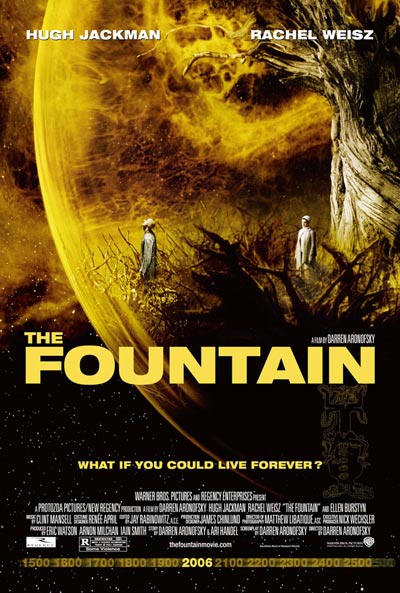
I'm not going to go into it except to mention that you should watch it, as if you're going to listen. It is, as the poster and tagline imply, about life and death and trees and a bald guy floating around in space.
I was watching it today for something like the fifth time since it came out, and it didn't shake my world as much as it had some of those previous times, except for what I later understood to be the surprisingly novel sensation of giving serious consideration to metaphysical issues.
My mind has been occupied, when it in fact had been occupied, by moral issues instead. It had and still does disturb me how ignorant people are of the moral consequences of their general complacency.
I do still mean what I said a few posts and more months back about our collective thinking being hijacked by self-impelling institutions like nationalism, orthodoxism, and fascism (as expressed by adoration for the strong and contempt for the weak - a trait very prominent in capitalism, for one).
People have a general tendency to accept that what serves the nation, custom, or unrestrained enterprise is good, without pausing long enough to consider who this kind of thinking serves and who it causes untold suffering to.
So I've been trying very hard to keep my mind clean of this, and it's even managed to spill a little into my behaviour and conversation, but what I've only noticed now is that it appears to have taken over the whole of the area of my brain devoted to "serious issues" and to have pushed out almost all of my previous musings about spirit and beauty and love and emotion almost clean out.
I stopped being religious close to a year ago now, essentially because of the moral issues I occasionally try to explain here. Its spiritual aspect seemed genuine but not exclusive enough to itself to warrant the intellectual subjugation that it by definition demands. So I'm left now with a fragile but sincere and workable moral framework in its stead, but almost none of the presumedly much easier to get hold of spiritual take on the world.
Because I haven't been looking. It's difficult to speak (or even think) metaphysical mumbo jumbo without having a very rich religious tradition backing you up. The fact is, on this subject, you are always blowing up a bubble. You can be made to feel comfortable inside it if other, "respectable" people have tried to blow it up before you, but otherwise, I guess you just have to feel less comfortable inside it.
Or you could try to find more about the non-denominationally affiliated people whose work you're continuing. I'm not the first secular man or even just non-frothingly-exclusivist-Jew (Rav Kook comes to mind) to take the issue of spirit seriously. So I guess I'm setting myself some rather vague reading assignments, as well as reminding myself to write here more often and allow and actively encourage myself to think seriously too about matters not involving morality and nefarious forces' relentless scramble for my brain.
Neil Young is not really relevant to any of this but he is awesome, so have a song:
I've just seen this film:
I'm not going to go into it except to mention that you should watch it, as if you're going to listen. It is, as the poster and tagline imply, about life and death and trees and a bald guy floating around in space.
I was watching it today for something like the fifth time since it came out, and it didn't shake my world as much as it had some of those previous times, except for what I later understood to be the surprisingly novel sensation of giving serious consideration to metaphysical issues.
My mind has been occupied, when it in fact had been occupied, by moral issues instead. It had and still does disturb me how ignorant people are of the moral consequences of their general complacency.
I do still mean what I said a few posts and more months back about our collective thinking being hijacked by self-impelling institutions like nationalism, orthodoxism, and fascism (as expressed by adoration for the strong and contempt for the weak - a trait very prominent in capitalism, for one).
People have a general tendency to accept that what serves the nation, custom, or unrestrained enterprise is good, without pausing long enough to consider who this kind of thinking serves and who it causes untold suffering to.
So I've been trying very hard to keep my mind clean of this, and it's even managed to spill a little into my behaviour and conversation, but what I've only noticed now is that it appears to have taken over the whole of the area of my brain devoted to "serious issues" and to have pushed out almost all of my previous musings about spirit and beauty and love and emotion almost clean out.
I stopped being religious close to a year ago now, essentially because of the moral issues I occasionally try to explain here. Its spiritual aspect seemed genuine but not exclusive enough to itself to warrant the intellectual subjugation that it by definition demands. So I'm left now with a fragile but sincere and workable moral framework in its stead, but almost none of the presumedly much easier to get hold of spiritual take on the world.
Because I haven't been looking. It's difficult to speak (or even think) metaphysical mumbo jumbo without having a very rich religious tradition backing you up. The fact is, on this subject, you are always blowing up a bubble. You can be made to feel comfortable inside it if other, "respectable" people have tried to blow it up before you, but otherwise, I guess you just have to feel less comfortable inside it.
Or you could try to find more about the non-denominationally affiliated people whose work you're continuing. I'm not the first secular man or even just non-frothingly-exclusivist-Jew (Rav Kook comes to mind) to take the issue of spirit seriously. So I guess I'm setting myself some rather vague reading assignments, as well as reminding myself to write here more often and allow and actively encourage myself to think seriously too about matters not involving morality and nefarious forces' relentless scramble for my brain.
Neil Young is not really relevant to any of this but he is awesome, so have a song:
Wednesday, 29 July 2009
Rantings and Ravings
Another thing I wrote not originally intending to post here. Apologies for the total lack of diplomacy present. I never say these things and I need practice:
__________
I am plagued by the spectres of religion and nationalism. These are inescapably moral reflections. It strikes me as not only intellectual but also (consequently?) moral laziness – one might almost say negligence – to adopt your freeze-packed “religious and national identity” and thereby forestall all major ethical preoccupation. Who needs sober appraisal of situations when you can accept Christ as your saviour or Israel as your redemption and be done with it? Social injustice? Public corruption? Political repression? Never mind, let’s just sing the national anthem and celebrate the fact that our ancestors may or may not have shared an approximation of this patch of land, a language, and terrified xenophobia for an endlessly prolonged miserable and meaningless collective existence. We must proudly continue in their tradition of supremacist indifference to the suffering of anybody who looks different.
I suspect that “ethnicity”-based nationalism is simply the evolution and modern disguise of race-based nationalism. Both involve the attribution of worth – of “belonging” – to inborn, unchoosable and unchangeable characteristics. It denies a person the right to carve out his own identity and destiny. The fact that this time the focus is on shared history rather than genetics makes absolutely no fucking difference.
What ostensibly does is “ethnicity”’s focus on shared culture, language, and religion. Religion is of course a whole different, probably larger topic, but all three of these things can fall under the general heading of culture.
“Culture”, as per the broadest and most concise definition I have so far encountered, is a set of shared behaviours and beliefs. Behaviours can include language, artistic and culinary preferences, festivals and customs. Beliefs can include of course religion, and generally the philosophies with which a society naturally and probably even innocently indoctrinates its members.
I am more partial to culture because it doesn’t make any sweeping judgements about who you are and what you deserve. If you grow up in a society from an early enough age, you inherit its culture. That’s all there is to it.
I say inherit its culture, but I mean up to a point. Hopefully, at least. Language is the most straightforward of these, but even if I grew up in Israel and can speak Hebrew perfectly well, that doesn’t mean I should hold it above English, or French for that matter, once I learn and master it. The rest are way worse. Because I’m Israeli doesn’t mean I have to like falafel, mizrahi music or “canonical” literature, celebrate Purim or Hannukah or Succot, or have a propensity to hike across the land or clap when the airplane lands. None of these things are exactly bad, but their marking the culture is simply a cold, statistical observation about what happens to be the state of things in today’s Israel. It’s retrospective rather than prescriptive. If in the next 50 years we for some reason get a huge influx of millions of immigrants from Ghana and Vietnam, the definition of Israeli culture will drastically change. That’s just a fact. A country’s culture is defined by its people, not its people by its culture.
Which is of course a gross oversimplification. The inhabitants of a society are strongly affected by the cultural mood of their surroundings, but, unless there’s malicious governmental involvement, the cultural hegemony is not complete. It irritates me when I’m told that because I’m an Israeli, I should be familiar with certain definitive cultural entities. Implicit (and often explicit) in this assertion is the suggestion that if I don’t do this, I’m not really a true Israeli. This is ethnic pride at work, and where it begins to be stupid and annoying, if not yet dangerous.
What people seem to fail to realize is that this cultural baggage, for all its richness, is a limitation. We (at least in the affluent countries) live in a globalized world. One of the awesome things about that fact is that we’re exposed to the treasures of so many other cultures. In times past we were confined to our own country, if that, and had access only to our language, art and food, holidays and traditions, to return to my previous list. We only had that to choose from and enrich our lives with. Today as an Israeli there’s nothing stopping me from making American movies, British music, Chinese food and the aforementioned French language a major part of my life. There does, though, apparently, seem to be something preventing me from taking on the holidays and traditions of other cultures. Why? If I enjoy Halloween or the regular employment of geishas (I can’t think of a proper example for cultural customs), why not make them a part of my life? Why do they belong to the British Commonwealth and Japan? Why do you have to have historical justification for taking part in an activity which you enjoy?
I don’t think you do. I think it’s a totally arbitrary misconception. We accept societies’ cultural exclusivism because we buy into the myth of ethnicity. We actively perpetuate the distinctions between cultures out of a misguided, haughty idealism. We encourage individual conformism for the sake of cultural distinctiveness, so that instead of “ethnicity” providing us with an identity, it robs us of it and blends us into the background of a proud, effectively faceless collective.
The really problematic aspect of all of this is, of course, the shared beliefs. That a society will instill into virtually all of its members a measure of intellectual conformity is unfortunate and probably unavoidable. That this will be seen as a virtue by intelligent people boggles the mind, or at least my mind. We have a wealth of knowledge and speculation at our disposal. There is no longer any excuse to be narrow-minded and frugal in our thinking. We have fully sufficient resources and capability to make up our own minds. This terrifies us. We latch on to soothingly simplistic and ideologically comprehensive organized religion and idealistic nationalism. Who needs to distinguish right and wrong or take a stand when instead you can follow your edicts, glorify your country, and cheer for your football team. Everything is A-OK.
__________
I am plagued by the spectres of religion and nationalism. These are inescapably moral reflections. It strikes me as not only intellectual but also (consequently?) moral laziness – one might almost say negligence – to adopt your freeze-packed “religious and national identity” and thereby forestall all major ethical preoccupation. Who needs sober appraisal of situations when you can accept Christ as your saviour or Israel as your redemption and be done with it? Social injustice? Public corruption? Political repression? Never mind, let’s just sing the national anthem and celebrate the fact that our ancestors may or may not have shared an approximation of this patch of land, a language, and terrified xenophobia for an endlessly prolonged miserable and meaningless collective existence. We must proudly continue in their tradition of supremacist indifference to the suffering of anybody who looks different.
I suspect that “ethnicity”-based nationalism is simply the evolution and modern disguise of race-based nationalism. Both involve the attribution of worth – of “belonging” – to inborn, unchoosable and unchangeable characteristics. It denies a person the right to carve out his own identity and destiny. The fact that this time the focus is on shared history rather than genetics makes absolutely no fucking difference.
What ostensibly does is “ethnicity”’s focus on shared culture, language, and religion. Religion is of course a whole different, probably larger topic, but all three of these things can fall under the general heading of culture.
“Culture”, as per the broadest and most concise definition I have so far encountered, is a set of shared behaviours and beliefs. Behaviours can include language, artistic and culinary preferences, festivals and customs. Beliefs can include of course religion, and generally the philosophies with which a society naturally and probably even innocently indoctrinates its members.
I am more partial to culture because it doesn’t make any sweeping judgements about who you are and what you deserve. If you grow up in a society from an early enough age, you inherit its culture. That’s all there is to it.
I say inherit its culture, but I mean up to a point. Hopefully, at least. Language is the most straightforward of these, but even if I grew up in Israel and can speak Hebrew perfectly well, that doesn’t mean I should hold it above English, or French for that matter, once I learn and master it. The rest are way worse. Because I’m Israeli doesn’t mean I have to like falafel, mizrahi music or “canonical” literature, celebrate Purim or Hannukah or Succot, or have a propensity to hike across the land or clap when the airplane lands. None of these things are exactly bad, but their marking the culture is simply a cold, statistical observation about what happens to be the state of things in today’s Israel. It’s retrospective rather than prescriptive. If in the next 50 years we for some reason get a huge influx of millions of immigrants from Ghana and Vietnam, the definition of Israeli culture will drastically change. That’s just a fact. A country’s culture is defined by its people, not its people by its culture.
Which is of course a gross oversimplification. The inhabitants of a society are strongly affected by the cultural mood of their surroundings, but, unless there’s malicious governmental involvement, the cultural hegemony is not complete. It irritates me when I’m told that because I’m an Israeli, I should be familiar with certain definitive cultural entities. Implicit (and often explicit) in this assertion is the suggestion that if I don’t do this, I’m not really a true Israeli. This is ethnic pride at work, and where it begins to be stupid and annoying, if not yet dangerous.
What people seem to fail to realize is that this cultural baggage, for all its richness, is a limitation. We (at least in the affluent countries) live in a globalized world. One of the awesome things about that fact is that we’re exposed to the treasures of so many other cultures. In times past we were confined to our own country, if that, and had access only to our language, art and food, holidays and traditions, to return to my previous list. We only had that to choose from and enrich our lives with. Today as an Israeli there’s nothing stopping me from making American movies, British music, Chinese food and the aforementioned French language a major part of my life. There does, though, apparently, seem to be something preventing me from taking on the holidays and traditions of other cultures. Why? If I enjoy Halloween or the regular employment of geishas (I can’t think of a proper example for cultural customs), why not make them a part of my life? Why do they belong to the British Commonwealth and Japan? Why do you have to have historical justification for taking part in an activity which you enjoy?
I don’t think you do. I think it’s a totally arbitrary misconception. We accept societies’ cultural exclusivism because we buy into the myth of ethnicity. We actively perpetuate the distinctions between cultures out of a misguided, haughty idealism. We encourage individual conformism for the sake of cultural distinctiveness, so that instead of “ethnicity” providing us with an identity, it robs us of it and blends us into the background of a proud, effectively faceless collective.
The really problematic aspect of all of this is, of course, the shared beliefs. That a society will instill into virtually all of its members a measure of intellectual conformity is unfortunate and probably unavoidable. That this will be seen as a virtue by intelligent people boggles the mind, or at least my mind. We have a wealth of knowledge and speculation at our disposal. There is no longer any excuse to be narrow-minded and frugal in our thinking. We have fully sufficient resources and capability to make up our own minds. This terrifies us. We latch on to soothingly simplistic and ideologically comprehensive organized religion and idealistic nationalism. Who needs to distinguish right and wrong or take a stand when instead you can follow your edicts, glorify your country, and cheer for your football team. Everything is A-OK.
Tuesday, 28 July 2009
Meta-writing
I can't guarantee you'll understand a word of what's going on here, and I'm not even sure that I'll like this in the morning, but I've just spent way too long writing this thing, so I'm here showing off before I change my mind:
__________________
He sat in front of his computer keyboard, totally at a loss. He didn’t entirely understand what he was doing here in the first place. He’d felt an irresistible compulsion to sit down and write, but how could you feel compelled to write when you didn’t have any specific thing you were anxious to write about? Could he be deluding himself – attempting to pigeonhole himself into the role of “writer” for the sake of some kind of smug self-satisfaction?
He leaned back in his chair and folded his arms, staring defiantly at the computer screen. And why not, he asked himself? Was anything worthwhile ever done not out of emulation and an aspiration for self-realization? Why must everything be justified? Why must the justifications he is only making to himself be so protracted, so clinical, so scientific? He seemed enslaved to the judgements other people weren’t even making. He felt oppressed.
He squinted at the blank screen and bit his lip thoughtfully. There’s a thought – can you be oppressed without an oppressor? It would require you to inhabit an alternative, virtual reality. Staring at the virtual page under his proverbial pen, he wondered what to make of the fact that this was the very method he intended to use to get himself out of his virtual prison.
He was getting a little confused by now. He gazed at the screen for a little while longer, rubbing his temple and forehead, then abruptly got up. He walked over to the fridge to get a drink of water.
Bent down, peering inside it, he paused. What did he need? What are you looking for when you find writing? He searched the bowels of his refrigerator and was embarrassed to be actually surprised they didn’t provide an answer. He stood back up and closed its door distractedly. He looked around in confusion. What was he doing here again?
- - -
Back at his computer, cup of water firmly in hand, he stared intently at the forbidding whiteness of the page in front of him – at the surgical lines, dull grey, and vaguely mathematical-looking implements encompassing it – and realized for the first time how dead it all looked. At the same time he noticed how representative it was of his own state of mind and spirit. He sipped at his water, then laid the glass down and placed his hands resolvedly on the keyboard.
He licked his lips. There was something wrong here. He was trying to fight fire with fire – self-suffocation with self-analysis. It was not a study and exploration of himself that he needed. What he needed was emancipation.
He breathed in deeply and shook his head. A familiar restlessness was beginning to take him. He shrugged wearily and supposed he’d walk it off.
- - -
He closed the door behind him and looked around, and up. It really was beautiful, being outside. He admired how the sky and the trees and the wind and the anonymous smells floating towards him seemed to just happen, with a graceful effortlessness. It was a pity that he only let himself enjoy them when an emotional disquiet more or less forced him out of the house.
But kind of representative too, on second thought. He wasn’t effortless. He’d never been even remotely spontaneous. If he didn’t make a conscious decision to go enjoy himself he simply wouldn’t. That wasn’t the way he was. He was methodical and analytic. It was, as they say of superheroes, his gift and curse. It was his identity.
He walked over to a patch of grass and bent down in it. He put his fingers to a blade of grass and felt gently around it. He scowled at it in confusion. Wasn’t the fact he saw value in this conclusive proof that he was not, in fact, a soulless automaton? The anemic language he seemed enveloped in appeared to obscure something fundamental to his experience of life.
He stumbled over to a nearby bench, now completely exhausted. He leaned his head back and breathed deeply a few times. Then he leaned forwards with his elbows on his knees and his hands joined together, staring underneath them at the grass again.
His mind was the mind of a mathematician. If he could convert ideas into numbers, he’d probably do it – it would make it that much easier for him to know his way around. This was simply how he understood the world. It was not, however, how he enjoyed the world.
A sudden burst of restless energy sprung him up from the bench again. There was a discrepancy here, between how he thought and how he felt – how he talked and how he lived. This was not an insurmountable discrepancy, but it made him uncomfortable and so he ignored it. Instead of keeping his innards and communications separate, what he should be doing is expressing himself.
But the coupling of these two modes of existence seemed so absurd! His “soul” was irrational, visceral, impulsive, and violently alive, while his thinking was cold, calculating, and intensely discriminating. The two seemed antithetical. Yes, the goal here is to express yourself, but can you express yourself in what are essentially mathematical formulas?
Yes, he decided suddenly. Yes. You can do what you want.
__________________
He sat in front of his computer keyboard, totally at a loss. He didn’t entirely understand what he was doing here in the first place. He’d felt an irresistible compulsion to sit down and write, but how could you feel compelled to write when you didn’t have any specific thing you were anxious to write about? Could he be deluding himself – attempting to pigeonhole himself into the role of “writer” for the sake of some kind of smug self-satisfaction?
He leaned back in his chair and folded his arms, staring defiantly at the computer screen. And why not, he asked himself? Was anything worthwhile ever done not out of emulation and an aspiration for self-realization? Why must everything be justified? Why must the justifications he is only making to himself be so protracted, so clinical, so scientific? He seemed enslaved to the judgements other people weren’t even making. He felt oppressed.
He squinted at the blank screen and bit his lip thoughtfully. There’s a thought – can you be oppressed without an oppressor? It would require you to inhabit an alternative, virtual reality. Staring at the virtual page under his proverbial pen, he wondered what to make of the fact that this was the very method he intended to use to get himself out of his virtual prison.
He was getting a little confused by now. He gazed at the screen for a little while longer, rubbing his temple and forehead, then abruptly got up. He walked over to the fridge to get a drink of water.
Bent down, peering inside it, he paused. What did he need? What are you looking for when you find writing? He searched the bowels of his refrigerator and was embarrassed to be actually surprised they didn’t provide an answer. He stood back up and closed its door distractedly. He looked around in confusion. What was he doing here again?
- - -
Back at his computer, cup of water firmly in hand, he stared intently at the forbidding whiteness of the page in front of him – at the surgical lines, dull grey, and vaguely mathematical-looking implements encompassing it – and realized for the first time how dead it all looked. At the same time he noticed how representative it was of his own state of mind and spirit. He sipped at his water, then laid the glass down and placed his hands resolvedly on the keyboard.
He licked his lips. There was something wrong here. He was trying to fight fire with fire – self-suffocation with self-analysis. It was not a study and exploration of himself that he needed. What he needed was emancipation.
He breathed in deeply and shook his head. A familiar restlessness was beginning to take him. He shrugged wearily and supposed he’d walk it off.
- - -
He closed the door behind him and looked around, and up. It really was beautiful, being outside. He admired how the sky and the trees and the wind and the anonymous smells floating towards him seemed to just happen, with a graceful effortlessness. It was a pity that he only let himself enjoy them when an emotional disquiet more or less forced him out of the house.
But kind of representative too, on second thought. He wasn’t effortless. He’d never been even remotely spontaneous. If he didn’t make a conscious decision to go enjoy himself he simply wouldn’t. That wasn’t the way he was. He was methodical and analytic. It was, as they say of superheroes, his gift and curse. It was his identity.
He walked over to a patch of grass and bent down in it. He put his fingers to a blade of grass and felt gently around it. He scowled at it in confusion. Wasn’t the fact he saw value in this conclusive proof that he was not, in fact, a soulless automaton? The anemic language he seemed enveloped in appeared to obscure something fundamental to his experience of life.
He stumbled over to a nearby bench, now completely exhausted. He leaned his head back and breathed deeply a few times. Then he leaned forwards with his elbows on his knees and his hands joined together, staring underneath them at the grass again.
His mind was the mind of a mathematician. If he could convert ideas into numbers, he’d probably do it – it would make it that much easier for him to know his way around. This was simply how he understood the world. It was not, however, how he enjoyed the world.
A sudden burst of restless energy sprung him up from the bench again. There was a discrepancy here, between how he thought and how he felt – how he talked and how he lived. This was not an insurmountable discrepancy, but it made him uncomfortable and so he ignored it. Instead of keeping his innards and communications separate, what he should be doing is expressing himself.
But the coupling of these two modes of existence seemed so absurd! His “soul” was irrational, visceral, impulsive, and violently alive, while his thinking was cold, calculating, and intensely discriminating. The two seemed antithetical. Yes, the goal here is to express yourself, but can you express yourself in what are essentially mathematical formulas?
Yes, he decided suddenly. Yes. You can do what you want.
Thursday, 9 July 2009
God Is in the Spaces between People

I didn't even like this movie that much, but I'm hoping it might provide a modicum of context for what is on my brain right now. This does, of course, only even have the chance of working if you've actually seen the movie, but hey.
These two people get on my nerves a little. They're conceited and cynical in the most infuriatingly cheerful way. They're quietly very smug about their half-baked intellectualist ideas of the ways in which the world revolves around them. They irritate me probably quite substantially less than the impression I'm giving here, but what I'm trying to say was that it wasn't the personalities or themes that got to me in this movie. Something got to me quite plainly in spite of them.
It's the way this film seems to define communication. When these two talk, it's not as if they even listen to each other particularly - they just seem to generally inhabit the same thematic universe inside of the same conversation. This leads me to induce that what constitutes true communication, is you going on and the other person actively encouraging you. He doesn't even have to take it in - he just needs to genuinely enjoy being a part of the interaction, and hear you out with something more than politeness.
I know that politeness doesn't cut it because I'm uber-polite, and over the past few years I have had ample occasion to observe that this is generally not enough. Even when I was actually actively listening to people, out of some weird misplaced sense of duty, when the subjects they were talking about did not excite me on a fundamental level, despite my alert attention, their own excitement and the conversation would fizzle out.
Another thing that annoyed me about these characters was their constant insistence on the transitoriness and ethereality of this night, when it seemed quite clear to me that all it was was chemistry between two human beings, which along with being awesome has the convenient advantage of being incredibly earthy and recreatable.
So, taking that into consideration, it puzzles me that I almost never try to communicate with people. I might not have the same level of chemistry with someone in my life as these two characters have, but I certainly share enough "themes" with people to be easily capable of communicating about them. I just keep it to myself. I think this is something I've begun to do fairly lately and I don't really know why.
I doubt it's for a good reason, though. If I recognize that communication with other people is pretty much what makes life worth living, shouldn't it follow that I would try to attain this? Is there anything holding me back except cowardice?
Tuesday, 7 July 2009
Sunsets and Community
In the bus, today, out of the corner of my eye I was a little startled to find an unusually bloody, stunning sunset covering most of the sky.
Besides being generally impressive to look at, sunsets seem to create a very particular atmosphere. Lately I've wondered what stands behind this, and if there are any generally accepted theories on the matter. My rash pop-psych suggestion is that the twilight of the sky leads to a kind of twilight of the mind, where you're suddenly both more secure and more questioning - more open, in a word, to whatever may come.
What came was a flashback to Shabbat evening meals in the Kibbutz. People from different families gathered together in the dining room, singing Shabbat songs and psalms. I remember the rabbi being particularly into this. It's a beautiful, mellow memory, and would usually take place when the sky was similarly lighted.
The reason this would require openness is that, the sweetness of this memory notwithstanding, it has been years since I've entertained the notion of community as anything beyond an enormous evil.
Community, to me, means conformity, hasty hurtful judgement, mob mentality, dissolution of the self. I'm not even seriously reconsidering this assessment, but it seems to me I've ignored some of the other things community is.
I've always gotten stuck on community pretending to be love, because I don't like lies in general, and like that specific one even less. Community is a partnership of convenience. That's all it has been and probably all it can be. A community cannot be a family, but what can it be?
Perhaps just a collection of moving human moments. A sunset isn't love either, and doesn't "mean" anything, but that doesn't lead me to disdain it. You don't need to justify enjoying things. What you need to justify is moral convictions.
It's the moral convictions attached to the concept of community that disturb me. Conformity, tribalism, jingoism, even a kind of enthusiastic obedience - in short, the collectivist idea that the group is more important than the sum of the individuals that make it up.
But this doesn't have to be the only way of setting up a community. What's wrong with the idea of an ideologically neutralized community of convenience? A place where people live together for the sake of company and nothing else? I suppose small agricultural settlements are technically like this, but my understanding is these places aren't usually very communal in character. People keep to themselves unless they feel they share an ideology with their surroundings.
I don't know exactly about Islam, but it seems that one of the major things that have kept Judaism and Christianity alive even after the secularization of the political and professional world is the synagogue/church which implies a community - one that even many fervently secular people are eager to take part in. It seems a lot of people feel comfortable refraining from thinking too hard about the religious ideology they're purporting to follow, because what they're really after is the community that comes as a major unexpected perk, as it were.
So what we need is a new religion. A more sympathetic one, with less absolutism. One that recognizes our spiritual, emotional needs and doesn't promulgate any far-reaching moral assertions.
Why do we always have to mix spirituality and politics? The only ideology a community needs is that which involves the way the members deal with one another - whatever can neutralize the dangers that a community represents. A community needs to consider the emotional and spiritual welfare of its members. Otherwise it just needs to enjoy itself.
Community is positive in enjoyment and in action; it is repugnant in thought and in feeling.
Besides being generally impressive to look at, sunsets seem to create a very particular atmosphere. Lately I've wondered what stands behind this, and if there are any generally accepted theories on the matter. My rash pop-psych suggestion is that the twilight of the sky leads to a kind of twilight of the mind, where you're suddenly both more secure and more questioning - more open, in a word, to whatever may come.
What came was a flashback to Shabbat evening meals in the Kibbutz. People from different families gathered together in the dining room, singing Shabbat songs and psalms. I remember the rabbi being particularly into this. It's a beautiful, mellow memory, and would usually take place when the sky was similarly lighted.
The reason this would require openness is that, the sweetness of this memory notwithstanding, it has been years since I've entertained the notion of community as anything beyond an enormous evil.
Community, to me, means conformity, hasty hurtful judgement, mob mentality, dissolution of the self. I'm not even seriously reconsidering this assessment, but it seems to me I've ignored some of the other things community is.
I've always gotten stuck on community pretending to be love, because I don't like lies in general, and like that specific one even less. Community is a partnership of convenience. That's all it has been and probably all it can be. A community cannot be a family, but what can it be?
Perhaps just a collection of moving human moments. A sunset isn't love either, and doesn't "mean" anything, but that doesn't lead me to disdain it. You don't need to justify enjoying things. What you need to justify is moral convictions.
It's the moral convictions attached to the concept of community that disturb me. Conformity, tribalism, jingoism, even a kind of enthusiastic obedience - in short, the collectivist idea that the group is more important than the sum of the individuals that make it up.
But this doesn't have to be the only way of setting up a community. What's wrong with the idea of an ideologically neutralized community of convenience? A place where people live together for the sake of company and nothing else? I suppose small agricultural settlements are technically like this, but my understanding is these places aren't usually very communal in character. People keep to themselves unless they feel they share an ideology with their surroundings.
I don't know exactly about Islam, but it seems that one of the major things that have kept Judaism and Christianity alive even after the secularization of the political and professional world is the synagogue/church which implies a community - one that even many fervently secular people are eager to take part in. It seems a lot of people feel comfortable refraining from thinking too hard about the religious ideology they're purporting to follow, because what they're really after is the community that comes as a major unexpected perk, as it were.
So what we need is a new religion. A more sympathetic one, with less absolutism. One that recognizes our spiritual, emotional needs and doesn't promulgate any far-reaching moral assertions.
Why do we always have to mix spirituality and politics? The only ideology a community needs is that which involves the way the members deal with one another - whatever can neutralize the dangers that a community represents. A community needs to consider the emotional and spiritual welfare of its members. Otherwise it just needs to enjoy itself.
Community is positive in enjoyment and in action; it is repugnant in thought and in feeling.
Subscribe to:
Posts (Atom)