Wednesday, 13 January 2016

Theatre of the Ridiculous

Okay - drop everything, even if expensive, and watch this masterpiece right now:


Everything we do is fundamentally ridiculous. From our pointless jobs through our institutionalised obsession with hearing people's made up stories to the elaborate culture and values built around and towards the moronic spasmatic movement of sex and even disturbing phenomena like child-soldiers - everything enshrined in culture as a convention or value is essentially a joke we all too often forget to laugh at.

Nothing deserves or justifies or transcends ridicule, because everything is already ridiculous, and anything else it can be it can only be in addition to ridiculous.

I find this thought inspiring. And a promising avenue out of a cultural economy of fear and pretentiousness and complicity and repression. And it is probably what basically all comedy is about, but I feel like it's distilled particularly articulately and beautifully ridiculously in the mind-blowing parody of life here above.


One of the interesting advantages of being bilingual and sort of more or less bi-national, is seeing quite clearly how ridiculous people sound when talking in a new language. It has also probably made it much more difficult for me to speak in newly learned languages without feeling acutely my ridiculousness while doing so. What secret Zen master Nathan Fielder is demonstrating here is both that one should not feel ashamed or embarrassed about this ridiculousness, and could and should feel free to literally broadcast it, and that, by clumsy extension towards my previous anecdote - that speaking a language "well" only serves to obscure the inherent ridiculousness of everything.

A good working definition for secularism in a profoundly religiously saturated culture, I think, is the ability to treat something as worthwhile without needing it to be unridiculable. It is at any rate a good working definition for not being a pretentious arsehole, like fucking Baudrillard.

Saturday, 23 May 2015

Losers

I'm reading Roland Barthes, in my spare time, which is the kind of thing I can never do over too extended a period before I begin feeling like a pretentious arsehole. It has occurred to me that there may be more to this aversion than the more workaday, knee-jerk why-are-you-reading-weirdo-Frenchy-eggheads conventional societal reaction. I suspect it has more to do with my ambivalent attitude towards religion and mainly towards the alternative secular triumphalism most obviously evident in weirdo Frenchy eggheads but basically apparent pretty much everywhere secularism manages to take root.

My basic perception is this: Politicians and capitalists and religious leaders repress us by demanding obedience, narrow-mindedness and, basically, hatred of the Other. They kind of suck. On the other end of the spectrum, scientists and intellectuals and professional secularists repress our spirituality, emotionality, imagination and even capacity for hope. For Barthes, there is nothing to anything beyond bourgeois and petit-bourgeois mystification and diversion from exploitation and structured inequality.

I'm not saying I don't take a side in this political struggle, because I most definitely do - basically for reasons of solidarity - but the lesser of these two evils is still pretty damn evil, or at least harmful. Thinking critically about things never made anybody happy, and never got anybody as excited as a patently uneducated and uncritical 9-year-old could get about train engines for reasons he would never be able to explain to you. And that's what being a human is really about. The problem is that not everybody gets an opportunity to follow and express that; not the gaps in salaries and GDPs. And scientists and intellectuals seem to routinely miss the point - to even miss why the other side got so many followers in the first place. Because at least those guys don't require you to be dead inside before they hand out a membership card.

What is common to both of these opposing camps is that they are placed firmly in the elite. They talk of reform and change and improvement and even occasionally of revolution but the status quo supplies them with an enormous amount of prestige and they seem motivated to maintain it, whether they realise this or not. Having people actually emancipated, actually free to feel and think and do without looking over their shoulders to make sure they're following the rules of either obedience or hipster-cynical-subversive-obedience is not something anybody seems particularly interested in. Feelings of superiority over the idiot masses appear generally more tempting.

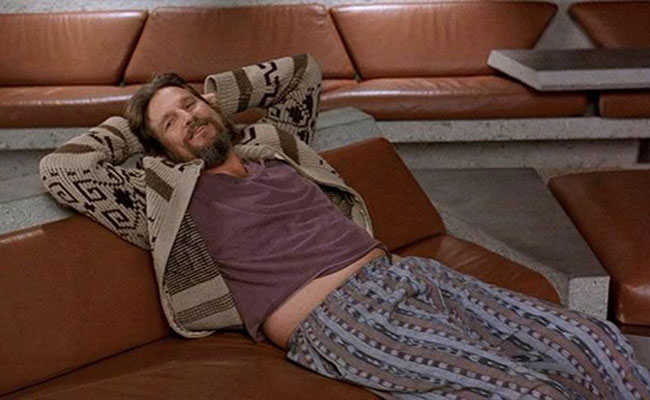
True salvation for the idiot masses could only come, I think, from hippies. From pot-smokers. From this guy:


I think Barthes is right, and it is basically a problem of the bourgeois order that we look at The Dude and think, "he's lazy", instead of thinking "here's a guy who knows how to enjoy life without getting in anybody else's way." Why do we immediately think of his contribution to the economy? He's a spiritual asset. That's worth much much more.

I was reminded of a quote of Orwell's this week: "The quickest way of ending a war is to lose it." We are all, individually, fighting a war for economic growth and a war for "knowledge" and neither of these is serving us particularly well. What we really need is self-acceptance, and pride in failing to meet meaningless and repressive criteria.

It matters because you feel it, not because it gains anybody's approval. If only disapproval wasn't so scary.

Saturday, 15 November 2014

Doubt

My adolescence, which doesn't feel like it's over yet, was characterised chiefly by doubt. First, doubt of everything people were saying around me, and then, overwhelmingly, doubt of myself. Self-doubt has become basic to how I approach life, taking my cue from the scientific method and republican and Marxist humanism.

The flip side of doubt, to my mind, is confidence. In anything. Confidence seems like glorified blind faith, whether it's in a set of beliefs or in your own abilities. It is antithetical to criticism, to commitment to the truth and to authenticity. It is basically superstition, and like most superstitions, basically in service and affirmation of the status quo. Confidence is a guy smiling with two thumbs up and telling you everything is a-okay. But I don't think even he really believes himself.

I feel like I've been carrying with me, almost everywhere, as a sort of alternative to confidence, an all-pervasive ironic detachment. If confidence is religion, irony is the nihilistic overreaction of atheism. It preserves doubt, but to no actual purpose. It's a sort of neutered rebellion, because instead of changing anything it ignores the problem. Together with doubt, it implicitly preserves the basically religious notion of shame in deviance, because the alternative remains unvoiced.

Which got me thinking about a possible truer secular alternative to confidence, which is pride. Pride in doubt. I know pride is a major sin in Christianity, but I think its condemnation is basic to all repressive systems. Pride means not needing outside affirmation. It means you're okay even if you're wrong. It means that you're human and you deserve to be loved. Maybe that's the value of the artistic public exhibition of weaknesses and pain. It's a sad pride parade. It's probably what this blog's about goddammit. Claiming your space without becoming doctrinaire. The same ways gays aren't actually trying to get straight people to sleep with people of their own sex. I would guess all people with an effective religious upbringing have a really hard time getting their heads around that. You express yourself merely to communicate that you rock.

Tuesday, 4 November 2014

Empire of Sadness


We've all heard of sad clowns (aren't they all?), but Nucky Thompson was a sad gangster. If Tony Soprano had moments of remorseful humanity, Nucky never enjoyed his criminal lifestyle in the first place. It's like me and university!

Organised crime is probably a fairly shitty way of pursuing happiness, but it's more than that - Nucky's sadness defines him. It's inextricably tied to his efforts, such as they are, to be good, and to find meaning. Even when he's happy, it's a sad happiness.

Why is sadness so important to him? Why is sadness so imporant in general?

Nucky's into saving people. It's a form of righting wrongs. I suppose that in order to want to help someone, you have to be empathetic and feel their pain. The same is probably true if you want to help yourself.

Thing is, he'd probably be much happier if he just had a good cry, and had less business meetings and more heart-to-hearts. In the final episode, without giving anything away, the audience gets an enormous sense of vindication simply from being allowed to see, without distractions, just how incredibly sad all of this is and always was.

There's also the denunciation of the American dream, which appears to have become a prerequisite for any American TV show these days. Straighten up and fly straight and your life will be fucking miserable. But it's difficult, with this kind of show, to derive any kind of approved, alternative attitude towards life. Except maybe Margaret's, with her refusal to be docile complemented by a wariness of corruption. Which again reminds me of Lisa Simpson, goddammit.

And maybe the bottom line is that it'll never get better than the 20s if we don't acknowledge that they actually sucked.

Saturday, 2 August 2014

Love and Loss


I sort of feel like this movie just changed my life.

It may just be my regular afterglow from watching a movie I really loved. It may be my developing man crush on Steve Coogan, who appears to have a really fantastic taste in screenplays. But, I suspect the reason it got so much under my skin, is that it challenged my conception of grown-upness, by splitting its expression into the representation of two extremely different characters.

Without risk of spoilers, I hope, I think this film can be summarised as the story of a simple, trusting woman, exploited, abused, brainwashed and essentially enslaved by Catholicism in its various institutional and ideological guises, who remains (miraculously?) singularly unrepressed.

Alongside her, we have a world-weary writer. An affluent, successful career-man and intellectual, he is at little risk of himself being crushed under the steamroller of such blind and trusting faith. He is also very clearly basically a teenager.

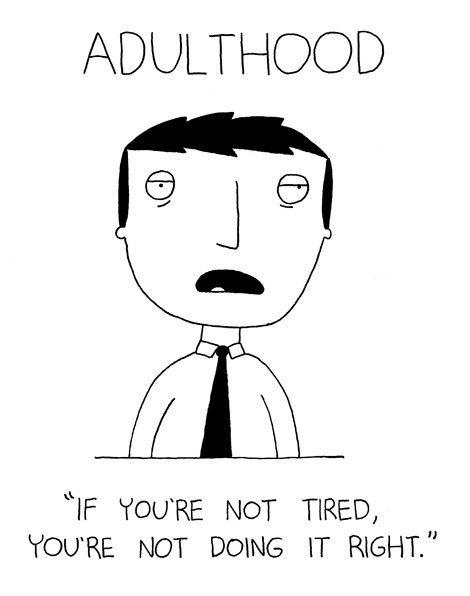
In the hope I can eventually tie all these strands together, I am reminded of this picture that every once in a while I see on facebook:


So which of these three options represents the real adulthood? And how come there are never any straightforwardly inspiring examples? It shouldn't really be worse than childhood or adolescence. Something good's supposed to happen on the way there too.


Here's what I think. Adulthood's about becoming a real person. No more adolescent, contrarian posturing or childish games of pretend. Grown-upness means taking responsibility for who and what you are. It also means accepting who you are no longer - which is to say, loss. Sometimes they can take away your baby. If you can somehow reconcile yourself to that, that probably means you're a real grown-up. I'm pretty sure I couldn't, the way I am at the moment.

Philomena seems authentic. It's a strange adjective to use, despite the fact that this is based on a true story, because movies and their characters can at the most be credible, but she distinctly feels like one of the most authentic people I've ever met despite the fact I've never met her. At the risk of sounding new-agey, she radiates love. Love of others and deep, accepting, love of herself. In a strange, paradoxical, very nearly incomprehensible way, I have to admit that there is something essentially religious about this self-acceptance. If you believe there is a God and this God loves you, that means you're objectively okay. That means you are completely free to be who you are.

But then, of course, there are the evil nuns. Evil nuns are all around us. Otherwise known as arseholes, they're there to exploit your vulnerabilities and weaknesses, and to try and persuade you, directly or through the threat they effectively represent, that you shouldn't be who you are because it's too dangerous. They have ruined religion. They have ruined self-love.

Evil nuns create embittered, frightened secularists like Steve Coogan's writer and myself. They make you wall yourself up to ensure freedom from their imposition, but then all you end up with is freedom to bang your head against a wall. You get stuck in perpetual rebellious adolescence because you can't get yourself to see beyond the fact that people are full of shit. Because you can't forgive.


I think this movie caused a little explosion in my brain when Philomena told Coogan's character that his righteous anger was pointless. Her exact words were "It must be exhausting." And it is. It genuinely boils my blood that you're expected to be perpetually tired in your adult life. I feel like somebody somewhere is trying to take away my baby. It maddens me that people judge you, on any pretext except that of potential harm to other people. I can't stomach it. I don't think I've ever really tried to.

Except I've been broken up with now. So maybe I'm beginning to.

Sunday, 13 July 2014

Weakness

Pretty much every time I see an interview program on the documentary channel, I am forcefully reminded of what seemed like a passing thought I had once, or daydream, of participating in such a program about sufferers of clinical depression. It's actually a pretty scary idea, but I'm reminded of it with a sort of moral urgency, like it's something I really ought to do, one way or another.

I suppose it functions, like every single bloody other thing in my life, as a metaphor for how I conduct myself towards the social world. Clinical depression is a serious illness, and it's important people are aware of it and are tolerant and intelligent towards its sufferers so as not to make it worse, which they easily could, but I've never actually been seriously ill. I've only ever really been seriously weak.

It's a sort of spectrum, which I can never really wrap my head completely around. What people refer to alternately as disinclination to pull yourself together or mental disease includes both an actual illness and what is just a personality type. Maybe a personality type more susceptible to this illness, but I suspect that mostly because of societal intolerance towards it. This personality type, or attribute, I think, is an emotional weakness, the equivalent of being born smaller and physically weaker than average, only invisible.

Only that's probably sort of like defining homosexuality as an inability to be attracted to members of the opposite sex. It may be technically accurate, but it accepts a bunch of arbitrary norms as worthy of deference. Homosexuality is, and especially was, essentially rebellious, subversive, and it's accepted as opposed to just tolerated today not just because we've become more open-minded, but because we've changed our minds about what sex means and what obligations we have in its context. One day we will do the same about emotions.

"Pulling yourself together" isn't just, or possibly at all, an impossibility for me - it also strikes me as incredibly dumb. Or unjustified, at least. I'm also depressed because I won't be repressed. I'm overwhelmed because my emotional reactions impress me and I take them more seriously than my responsibilities as an unattached grown-up. Even if I could pretend to process things the way people around me ostensibly do and we're all expected to, I don't particularly want to. I don't really see the point of such a life, which is where it starts to touch on the disease again.

Homosexuality used to be perceived as, which is to say to constitute, a moral weakness and a personal deficiency. To be a "practicing" homosexual, whether out of the closet or in, meant making your peace with your inferiority, and preferring a sex life to good citizenship. A practicing emotional subversive would prefer an emotional life to seeming respectable. But I still feel closeted.


It's sometimes difficult to tell what characterises just me and what's universal, but it seems to me that the most basic and pervasive human emotion is sadness. Joy comes along every once in a while when something good happens, but there's nothing close to symmetry between the two, and I have felt myself satisfied or happy at the same time as being sad. Sadness is just a reaction to being alive in a confusing and frustrating world.

Sadness means everything's a little too big at the moment, a little too heavy to carry. That you're just one person and the cards appear stacked against you. It means, essentially, that the status-quo is shit. It's not quite the anger that might lead you to try and change it, but it's close.

Grown-ups don't get sad, generally. They get heartbroken, when something's serious enough, or angry or stressed out, but sadness isn't even for pussies, it's for children. It's an admission that you're not grown-up enough to have everything under control, and what you'd really like to do is sit down on the floor and cry. Even if you don't go as far as doing it, you're implying it by giving too direct an indication of sadness. You're saying "This is a heavy load."

I do feel that I get sadder quicker, and deeper, than I'm supposed to. I'm not always so good at recognising it when it happens (though I think I'm getting better!). Generally speaking, nothing feels like it's worth anything before it incorporates sadness within it. All the people being strong and normal enough to be proper adults don't intimidate me so much once I'm into my sad groove. I'm alive and they're dead.

It's an emotional emancipation. If I can allow myself to feel that I'm only a man and what I'm up against is fundamentally too much, at least I have a chance to be free. At least people's friendship can mean something.

Thursday, 3 July 2014

Convention

Convention must be the most insidious form of repression, because it is the most invisible. Strangely enough, my most immediate association with the word is conventional bombing, which is a mind-blowing enough notion in itself. Convention can establish and excuse anything. It is ultimately convention that determines that 2+2=5, civilians may be murdered in masses, or whole peoples kept enslaved.

It also governs social etiquette. It becomes a more or less all-pervasive orthodoxy. You get the secular orthodox, liberal orthodox, easy-going orthodox, masculine orthodox, emotionally orthodox, constructive orthodox - not to mention the various forms of Orthodox orthodox.

I've just seen this film:


For a few weeks now reviewers have been going on about this film - justly, it transpires! - but they keep accidentally describing it as the story of a bunch of bored and unmotivated soldiers. It is in fact the story of a full-blown anarchist in military uniform, and her fight against the repressed repressors around her. It's sort of almost an apolitical film, but its and its protagonist's indifference to politics and army affairs is very strongly and stubbornly felt, the latter going as far as to claim that her sabotaging of army equipment was ideologically motivated. I believe her.

Anarchists. I am reminded of a song by Rage Against the Machine that ends with a seemingly endless repetition of the line "Fuck you I won't do what you tell me". It sort of seems like a silly line by a band with a silly name and a simplistic world-view, but it stuck in my mind. Mindless anarchism feels like as good a response as any to mindless conventionalism. If everybody does what everybody does just because everybody does it, it might be a demonstration of integrity to say "I will not do this, because you expect me to."

It doesn't even matter if the repressors are in the right. Even when obedience is necessary it is soul-and-life-destroying. You're supposed to step out of anarchistic adolescence and into responsible adult obedience, but it's fairly obviously a developmental regression. I really do think that in Israel it happens mostly in the army, and my exemption from it may be why I still feel like an adolescent, but I seem to be trying to convince myself now that is not a bad thing. Better immature than dead inside.

I get irritated with people a lot, but I do believe most of the time they're genuinely trying to do the right thing. That's probably the problem - that they're too convinced that they know what the right thing is. Usually "the right thing" just means "the commonly accepted thing".

I'm not good with the commonly accepted. It tends to bore me and I miss it or forget it. I'm not good with social etiquette. I'm really no fucking good with orthodoxy in any of its guises. It kills me that in some form, to some extent, I have no choice but to accept it. It confuses and unsettles me when I'm reminded that sometimes I actually don't have to. Sometimes boring bullshit can be called out, or dismissed, and they don't take your grown-up badge away. Sometimes they're only pretend rules. My least favourite kind.