Monday, 28 August 2017

Words are a Sawn Off Shotgun


I only really like music when I like the lyrics, but I only really like lyrics when they're confusing. I remember immediately falling in love with Dylan's Ballad of a Thin Man, which is a sort of paean to being an obscurantist arsehole who never gets to the point. My favourite stanza is this:


Now, you see this one-eyed midget shouting the word "Now"
And you say, "For what reason?" and he says, "How"
And you say, "What does this mean?" and he screams back, "You're a cow!
Give me some milk or else go home"
And you know something's happening but you don't know what it is
Do you, Mr. Jones?


For a good while I loved it because of how hilariously absurd and not even pretending to be about anything it was being. But then, one day, being bored in maths class and trying to write the lyrics from memory, it suddenly occurred to me that these lines totally did have a quite clear meaning. A dude who is short and half-blind and useless and pathetic is insisting on something. Mr. Jones demands a proper, coherent conversation, but pathetic-useless-face (hi, that's me) says fuck explanations, how do we get this done? What Mr. Jones neglects to consider is that he's a cow, and either he can contribute his milk to what is going on here or he is getting in the way.

Words can do pretty cool stuff sometimes, but not so much when they're being used to explain things. Explaining things means reducing them to something less than they are, and when you do that to a person, which happens a lot, you dehumanise them. But even in less dramatic circumstances, they make things stuffy and overbearing and quite a bit hostile. When you walk into a room with a pencil in your hand, you're not being open to the experience, hoping to encourage people to be more themselves, but have effectively appointed yourself micro-manager, assuming you'll be able to stifle the room into higher efficiency, but you are wrong.

In regular circumstances, you do not expect a sequence like "you say what does this mean and he screams back you're a cow! Give me some milk or else go home" to make sense. In regular circumstances you pare your talk down, using words to cut people's limbs off. The regular-circumstancey prototype of word-using is to say "What are you doing? That's weird." And all this leaves you very little manoeuvering space, in between people's reductions, to actually say or do something real. But when you actually manage to, there is never actually anything to explain. And anyway that's what I think this song is about:


Just as you take my hand
Just as you write my number down
Just as the drinks arrive
Just as they play your favorite song
As your blather disappears
No longer wound up like a spring
Before you’ve had too much
Come back in focus again

The walls are bending shape
You got a cheshire cat grin
All blurring into one
This place is on a mission

Before the night owl
Before the animal noises
Closed circuit cameras
Before you're comatose

Before you run away from me
Before you’re lost between the notes
The beat goes round and round

I never really got there
I just pretended that I had
Words are blunt instruments
Words are a sawn off shotgun

Come on and let it out

Before you run away from me
Before you're lost between the notes
Just as you take the mic
Just as you dance, dance, dance

Jigsaw falling into place
There is nothing to explain
You eye each other as you pass
She looks back, you look back
Not just once
Not just twice
Wish away your nightmare
Wish away the nightmare
You got the light you can feel it on your back
[A light,] you can feel it on your back
Your jigsaw falling into place

Thursday, 20 October 2016

Statement of Identity

I'm not exactly the most ambivalent of religion-losers, but I'm still a little envious specifically of that previous life's reality of broadcasting through a simple skull-cap a fairly comprehensive set of values that I could feel basically represented me well. I have also, in previous years, been carrying around this strange and possibly not entirely rational but similar jealousy of homosexuals, for their matter-of-fact ability (when not ensconced in furniture) of declaring their deviation from cultural expectation by the use of a simple word.

It's a funny sort of equivalence, because gays do not actually espouse a homosexual set of values, and presumably their homosexual-ness does not play a part in pursuing their own spiritual fulfillment, but I don't think the comparison is completely unfounded. Until relatively recently in Western history, both homosexuality and Jewishness had been treated essentially as character-flaws and products of bad decisions, and in both cases this attitude seems to have been alleviated by a conviction that these conditions are in-born and immutable, hinging less upon what you actually do than on your internal make-up. More significantly, at present they possess in common the theoretical possibility of blending in, eliminating all external signs of difference, and a defiant and to me inspiring unwillingness to do so.

Usually a passive one, though. Even the skull-capping Jews will not generally proactively broadcast and advocate their own specific manifestations of identity unless they're being annoying, and gays will pretty much point blank not do so unless they're William Burroughs. But perhaps they don't need to, because in spite of everything they a pretty extensive and well-known tradition of being very specific minorities behind them.

Spoiled wankers. Some people don't have that privilege. I can see now that this would have to be longer than I am inclined to make it in order to be done properly, so I'll make do with saying that in my opinion what inspires believing Jews to express their Jewishness what inspires same-sex attractees to express their homosexuality are equally and complementarily important motives, and the reason I am writing all this is that I wanted to sit down and write my updated version of both complements - what I find spiritually meaningful and what I think in the end makes me and everybody what we are.

Serious preoccupation with meaningfulness, whether in religion or literature or maligned science, seems to revolve uneasily around two often contradictory trajectories: morality and anchoring values on the one hand, and freedom and transcendence on the other. My own approach, regarding the former, has become the conviction that the only thing truly justifying and compelling an attitude of high seriousness and disciplined commitment even when we really really don't feel like it is the advocacy and promotion and acknowledgement of the feelings of sadness and fear, i.e., emotional distress. Both our own and those of others, especially those who have the invisibility of theirs to us enforced or encouraged. I think the legitimacy of sadness and fear is important because when allowed to just be emotions they become the basis for real empathy and acknowledgement of our own and others' humanity, and thus the ultimate base of anything conceivably important, and because when suppressed they become wrecking balls, blind and out of control and explosive.

And the thing these wrecking balls wreck, in the insistence as important and urgent and rigid on anything besides people's sad and frightened and vulnerable humanity, is stuff like homosexuals' ability to just have sex with people of the same sex and get on with it, for one, but much more besides. Freedom and transcendence. Part of the reason Burroughs has blown my mind so much is that he is the first person I have seen insist on the specific transcendence of unimpeded homosexual sensuality (or, in his own memorable formulation, "we see God through our assholes in the flashbulb of orgasm"), but maybe I'll let that go because neither homosexuality nor sensuality are the point here.

The point, or the claim, is that once you stop pointlessly getting into people's (or your own) shit, not only do you prevent needless suffering, but you enable a transcendent spiritual exultation of a kind whose existence Western culture seems to have already forgotten about or drastically misinterpreted. When your mind is clear, it's not simply nice because there's an absence of unpleasant noise, but there is room for actual life to actually begin - for the truly enthralling, dreamlike, trance-like, story-like, joke-like, madness-like developments in the face of which it is impossible to continue asking "Why did I even bother getting out of bed this morning?" When you reach this freedom, when you begin to experience this transcendence of the bullshitty and meaningless, you don't need answers because you no longer need the questions. Because you have actual engagement with the world.

So that's me. Hi.

Monday, 19 September 2016

Extraverting China-wards

"Actually he lives in a mythological world, where men, animals, locomotives, houses, rivers, and mountains appear either as benevolent deities or as malevolent demons..."  --  Carl Jung, on the introverted sensation type.
"Rows of houses, all bearing down on me. I can feel their blue hands touching me. All these things into position, all this things will one day swallow whole..."  --  Radiohead, on Street Spirit. 

Eating dinner in Sichuan is an interesting experience. I almost invariably leave these meals sweating profusely, exhausted, and feeling a little bit violated. Sometimes, like tonight, I find it exhilarating and really enjoy it. Sometimes I don't.

In that respect, it's a lot like the Chinese experience in general so far. I can't make the same excuses as on my last try here 4 years ago, about the smogginess, and hostility or ridicule, or general stressed-out attitude or crowdedness. Chengdu kicks arse. But there's just so goddamn much of it. It's constantly, consistently, unavoidably and seemingly inherently overwhelming. A neverending flood of new information, that probably isn't actually either deities or demons, but it's constantly on the attack.

To backtrack (hopefully) briefly, I have become very excited about Jung's conception of personality and life in general. Basically, if I may summarise the expertise gained by reading two or three whole papers/speeches of his, there's our insides, containing our personalities and the dreamscapey collective unconscious, and there's our outside, containing what we generally call life - society and its conventions and institutions. Introverts can pass breezily through surreal associations and meaningless aesthetics and emotionality but get into a panic when other people and mainstream society and culture pop up - extraverts are the other way round. It's a bad system because being good at one is almost meaningless when you're completely stupid at the other, but trying to improve the one you suck at is a central part of growing as a person, as I understand it.

Enter China. I have a pet peeve about China, which actually seems to grow in its irritatingness as time goes by. It is when anybody tries to say anything about it at all. A major part of China's continuing appeal to me is its sheer uncategorizableness. Its collapsing of our everythings. It's stupid enough to try to generalize about a normal-sized nation or religion or economy or culture or governmental infrastructure; at least you have a sort of vague idea of the object of whatever nonsense you're spouting. China's just too big and moves too fast for there to even seem to be anything to be talking about in the first place. You need to respect it as not being what it isn't.

So I am really perfectly happy to avoid prediction and generalization and just consider China as a setting and language within which to try and keep up if we must and to try and retrospectively understand and learn; as is, in fact, the only suitable way to approach basically anything ever - but in China it's more glaring. But I cannot seem to be happy doing this with my actual boring, privileged, sheltered student life here.

I constantly get lost. Among roads, among words, among foods, among people, among bureaucracies. The regular, decidedly undramatic stuff. And everything invariably ends up okay, especially here, and even if you have been a complete idiot, but everything also remains invariably unpredictable. Today I learned that the four tones I've been struggling so much with in Standard Chinese are actually spoken in this region in four entirely different ways, basically being reshuffled just to confuse me. I think it's a life lesson.

There are two ways to react to being lost in the outside world. Two roads diverging in a yellow wood, if you will. The well-travelled, decidedly introverted one, would be to panic, because oh no it's going to be revealed to the world what an impostor I am and how truly and profoundly I suck at this. I guess the extraverted way would be to just take it in stride with no hesitation, so let's instead call it the introverted-balancing way - would remember that it only matters that you're lost if you're trying to get somewhere, and even then only if you're supposed to be there on time, and even then only if your attendance levels are reaching perilous levels, and they're really quite generous with those allowances.

Today, for example, in German class, this Iranian dude tells me (this is already a good story, how cool is my life?) that he's actually fluent in German and taking this for the easy credit, but it's useful to actually learn about the differences between the definite articles, because he'd always just use "das" for everything. My mind is still reeling a little bit from that one - how can you think of yourself as fluent in a language when you don't have its articles under control? And it reels nevertheless when I easily respond to myself that articles are fucking stupid and almost entirely useless even without gender sometimes-differentiation. I have taught enough English to know that this is the only way to become fluent - to just not give a shit about doing things wrong, but it continues to come as a surprise to me that it's actually done and actually works.

So today I'm being made to move dorms because of course so lemme try to take that as an opportunity to officially pronounce myself China's bitch and see what it plans to do with me.

Friday, 3 June 2016

The Impulse/Mind/Body/Spirit Quadralism, Part 1

I've written before, in case you have dared to not religiously follow and memorise my writings, about the reasons to prioritise the body over the mind, or rather to see the better angels of the mind's nature as included within a more robust and coherent conception of the importance of the body. This invites further pontification.


Impulse to Mind; From Chimpanzees to Confucians:


A world prioritising impulse would have fairly obvious drawbacks. If I were doing this properly I'd probably quote Thomas Hobbes extensively, but since I haven't actually read him and am not actually going to do so just for the purposes of this post, we may make do with his famous formula that the consequent perpetual explosion of violence would render people's live "solitary, poor, nasty, brutish and short." Interestingly, this is not an argument more relevant to humans than to chimpanzees - just one that humans are in a better position to do something about.

If Leviathan were written today it would doubtless draw more attention to the situation of women in such circumstances, which perhaps was not sufficiently improved in 17th century England for this to provide a strong enough arguing point. More on that later (stay tuned!). The fact is that life would probably have been equally unpleasant to children and men who were physically smaller or weaker than average. There would also be significant problems with managing food, with people becoming obese in the unlikely event of its surplus or malnourished because of bad management both in consuming and producing food. Diseases would really suck. If access to any psychoactive drugs were around we would be even more comprehensively fucked. Which is to say, our bodies would suffer.

Impulse is not a good policy. It is fortunate that we developed a voice box and words and the ability to form our lives around ideas. Hobbes is correct in thinking this state of affairs worse even than authoritatian rule, but as Westerners we seem to have an almost instinctive aversion to and suspicion of the implications.

But Hobbes is basically a curio. More significant to world history was the world-view of Confucius, which, like Hobbes', curiously enough, was preached during a time of devastating civil war. Confucius doesn't speak of a social contract, but he does have what to me at least is a very strange intense conservatism without God, and ideological essentially without values except for the importance of ideologicalness.

It is true I am probably doing a great disservice here to the great variety and complexity of thousands of years of Confucianism, but I'm probably selling the chimpanzees even shorter, so bear with me. My point is that Confucianism is about definitions, about words, about ritual. The idea is to fight impulses by fighting nature, in an attempt to reprogram mankind into obedient virtuousness. Their hearts were probably in the right place, and the social order they brought about was probably better than endless war, but it was still pretty nasty in its own ways.

I am singling the Confucians out because it's a doctrine I find particularly annoying as well as unusually transparent in its subjugation to words and ritual as sacred. But I think this process of prioritisation of mind over impulse could probably be tracked down to basically the first time we used words to tell somebody to shut up or be ashamed or themselves. Probably it began intensifying when we started living in sedantary agricultural communities, when we became religious, when we invented nation-states, etc.

Next installment, I further explain why words are for Nazis!

Wednesday, 18 May 2016

Thinginess

"A man seeking revenge does not go so far as to smash the sword of his enemy; a man, no matter how hot-tempered, does not rail at the tile that happens to fall on him. To know that all things in the world are equal and the same--this is the only way to eliminate the chaos of attack and battle and the harshness of punishment and execution!" 
-- Chuang Tzu

 Daoism!

I am going through a spiritual re-awakening of sorts. Buddhist-Daoist type thing. A serious development, I think. Considering veganism and such.

I mention this as background to how I'm trying to confront the embarrassment inherent to taking this kind of thing very very seriously, the same way I would be kept up at night with the urgency of needing to know with Winston Smith what does it all mean in 1984 as if this wasn't just some thing written by some guy.

Anyway, This odd quote comes at the heels of an even stranger paragraph claiming that drunk people are less susceptible to physical injury simply because they are less aware of what is going on ("because his spirit is whole").

It's a sort of appeal to indifference, or to acceptance, I suppose. to a not-getting-hung-up-on-on-things type thing. Because things are just things, including us.

A probably necessary background is that Chuang Tzu is writing while everybody's killing everybody in a huge civil war that, this being China, is probably more comparable to a world war. The chaos of attack and battle and the harshness of punishment and execution are not just metaphors - they are very real and very ridiculous nonsense.

But still, there's an apparent logical contradiction here. If all things in the world were equal and the same, wouldn't that mean that it would make sense to get angry with bad people's swords or with flying tiles? Isn't the whole point that we should distinguish between what is deliberate and planned and avoidable and what is simply bad luck?

I think the answer to this can be approached by remembering that, opaque stylistics and gleeful logical incoherence notwithstanding, Daoism is very clearly and very unequivocally about not stressing out. It's not really "profound" - it's sort of precisely, and often satirically, the opposite.

It's about the attribution of undue significance, I think, Everything happens because of a cause, but not necessarily because of a reason. A tile falls on you because of gravity, a sword injures you because there's an arsehole at the other side of it, and shit in general happens because the climatic conditions of the world involve a perpetual rain of shit.

So buy an umbrella. But stop screaming at the sky because all that does is create an opening for turds to fly in through.


The more spiritualistic wishy-washy implications are that we happen because of causes. We are things that come into being because of things and will one day die because of things. This is not to suggest that there isn't anything beyond thinginess, but it is to suggest that it should only be looked for in what isn't things or thing-based.

The non-thing beyond things, in this metaphor, would be the incompetent roof design, or the sword-brandishing dude, or perhaps his troubled childhood. What would they represent, being not-things?

Why, the absence of the Dao! A workman working with the Dao would build a proper roof. A society and culture operating through the Dao would avoid needless violence and enmity. Working with the Dao addresses what is immediately relevant and disregards points of honour, convention, or stress in general. The avoidance of a master plan, a grand narrative or any kind or reductive urgency, so goes the idea, would allow us to freely, happily and acceptingly live, and, possibly, to not freak out so much about one day having to die.

Because maybe this non-thing is not just the absence of thinginess, but something beyond it. But we'll leave that for next time. Maybe.

Thursday, 21 April 2016

Bodies and Words

Continuing in the spirit of over-ambitiousness, I want to try and present a basic ethical framework - whose philosophical soundness is of supreme indifference to me.

The problem, fundamentally, with life, is culture. What Marxists would call the superstructure; what psychoanalysts would call the super-ego; what semioticians would call a sign system; what Daoists would call the dao of society; what sociologists would call socialisation; what I would just call the institution of words.

Words ruin everything. They promote and manifest mystification and reductionism even as they are marshalled to combat them. They have a mysterious fetishistic power that constantly pushes them beyond their instrumental use into seeming like the point of everything, but they're not. Words just suck.

Yes I am using words now, and yes in my own way I am even trying to write well in the assumption that felicitous exploitation of words has an aesthetic or stylistic and not merely an instrumental or substantive value, but the important distinction, I think, is that I aim for the words to belong to me rather than for myself to belong to the words.

But who is this "myself" that is to be considered more important than words? Can you have an identity that is not fundamentally mediated and compromised by verbal constructions?

This line of questioning is often presented as profound and paradoxical, but I think the answer is fairly simple. I am my body, and everything that lives and comes from within it. Crucially, this includes emotions, which are considerably influenced by outside, cultural, normative, ideological wordy factors, but are not created by them.

I think this is the basic oversight of contemporary, "postmodern" critical social and moral thinking. It's very preoccupied with how so much is created by discourse, that it neglects the fact that humans have elements that pre-exist culture, and often transcend or overpower it. We're so used of being afraid of this phenomenon - the reversion to barbarian physicality and bodiness - that we neglect to consider its potential to re-ground us in life as something real - primal, visceral and non-video-gamey.


A few months ago I had a really bad and really intense weed trip (yes, I didn't know that was a thing either), set off by the sensation of being inside a computer game, that then proceeded to dramatically malfunction. I think this is what the prioritisation of words does to us. They create an enormously elaborate house of cards, which is at the same time an intricate network of rules - like (shitty) programming code that we have to live in. There's stuff we are supposed to do and to be, with an implicit danger that if we don't do and be it successfully enough, the whole edifice will crumble, and we'll become chimpanzees again. We maintain our superiority and our lives' stability by conceding to the realm of words, well - basically anything it wants.

Progressing in a career is like progressing in a computer game. So is accumulating sexual conquests, or scoring marriages, alternatively. Almost everything we do is a proof that we deserve our privileged standing in the animal kingdom or our human geographical or class or gender or whatever position. Almost everything is an attempt to fend off the "GAME OVER" legend from appearing in the middle of our screen, only with no returning to the last saved point or even being able to restart. Whether it's explicitly a fear of death or only implicitly with the danger of losing cultural prestige and legitimacy, the message we're terrified of hearing is "Nice try, but you don't make the cut."

Because the institution of words guarantees inclusion in exclusive members' clubs. Immediately in the club of humans, more remotely (sometimes, as per fortune's favours) in the club of middle-classness or Westernness or maleness or sanity or whatnot, and ultimately in the distant promise of "successful" humanness - whether it's the millionaire or the player or the scholar or the person who's made it to heaven. And, once more, all of these clubs actually suck.

Still, I do think we have a better time of it than chimpanzees, even with our 40-hour work weeks and stress and bullshit. And, doubtlessly, we do have need of culture and words to maintain an existence where we have ready access to food and are not generally in danger of having our heads bashed in. But, as already implied by this, all of these words and culture ought to be there for the sake of our bodies' needs which would otherwise be neglected, not the other way round.

Other things our bodies need, other than food and not being mutilated, are things like love, respect, moral integrity, spiritual engagement and self-expression. Food that tastes good rather than just sustains us - even dogs can tell the difference between tasty food and bad, it's not a question of culture. There are a whole bunch of bodies in the world, and all of the people who live in them need these bodies taken care of. This does not necessarily entail the elimination of pain, discomfort or anxiety, but it does necessitate that we do not accept wholesale misery, repression or even boredom as culturally or ideologically justified or required. Things can only be bodily justified.

Bodies rule, words drool.

Wednesday, 30 March 2016

History, Philosophy, and Lyric

How's that for an overblown title?

So. Restlessness and indecision at my undergrad studies together with a lifelong urgent predisposition towards hearing stories and a suspicion towards anything pompously declaring itself "culture" have contributed to a preoccupation with a whole big bunch of stuff that I and I think pretty much everybody else would consider very important. But we're generally discouraged from having actual opinions about these things because they'd be considered "superficial". For my part, I think claiming expertise on fundamental cultural institutions is such an inherently stupid prospect, no matter what your level of education, that an impressionistic rendering is probably all anyone should ever aim for in the first place.

Anyway. the Ancient Greek word "historia", if wikipedia is to be believed, meant "inquiry", or "witness". Latin added the meaning of narrative, or story, as well as of specific investigation of past events. In Middle English the word was still used to describe both "past events" and narrative in general - as it still does in most other European languages. I would suggest that this duality, mysteriously cleaned out of contemporary English, is not accidental. Turning the past into a story and projecting a made-up story into the past are acts that require a very similar exercise of the imagination.

The first dude to write what we consider a history rather than just boring old chronologies or chronicles is Herodotus with his Histories of 440 BCE. This is because he made it investigative and narrativey (I do not think it would be a stretch to assume that the Latin meaning of "history" as "story" follows the example of his book), and also because we're a bunch of Eurocentric arseholes who won't accept the Zuo Zhuan as written before it. Anyhow, it was the beginning of Western historiography before it had a new beginning in 19th century Germany with "scientific" history that has since been basically discredited as nationalistic self-aggrandisement government-toadying but is still mysteriously revered.

Thing is, even without being scientific, "history" commands an authoritative cultural force just by the fact that it puts things in narrative form, because narrative is how we tell ourselves what things are and what they mean, and the only way any large collection of items gains coherence. The problem is, when we tell them unscientifically we can very easily end up with meanings that are completely bullshit.

The thing that makes things (that is, the "history" of things) scientific is called "philosophy", or at least used to be called that before it began being called "science" and to acquire an almost religious significance as super-mega-total-truth. I'll forego at least some of the obnoxious etymological overreaching and just start with the fact that until the 19th century, the Western way of studying nature was basically divided between "natural history" and "natural philosophy". I swear I'm going somewhere with this.

This might be a good place to point out that my erudite posturing here is based on reading exactly one book (or the relevant section of it, actually) about the history of science, but we'll assume that it and whatever else I've happened upon on this subject have not been lying. "Natural history" is more or less what it sounds and what the museums utilising its name still do: A catalogue of natural phenomena, based on systematic observation as opposed to experimentation - as is our contemporary discipline of "history". Also like it, it can be said to be aiming at a master narrative - a description of what nature is, and ultimately the necessary repository of its basic meaning before we can try to say anything about nature's significance.

But what nature is doesn't really seem to interest scientists all that much anymore. The discipline that won the day was "natural philosophy", which was interested in what nature does and how and why, and it got renamed into "science" (Latin scientia of "knowledge", "expertise"), just in case we might get confused and think there's anything else worthy of or susceptible to knowing.

The crazy thing is, "science" was such a wildly successful cultural institution, that it almost wholly subsumed "history" into it - not just natural history, but human history as well, and sometimes, it seems, even just regular made-up story history. Any self-respecting author since I frankly have no idea when - but definitely as in contrast to ancient Greek and Chinese times - walks and talks with an intellectual aura, one borrowed from scientists and philosophers. Nobody's "just" telling stories - they're investigating and exposing truths and bestowing their sagacity upon us. Except when they're writing best-sellers, I guess, but I'm trying to talk here about earnestly attempted, artistically ambitious stories.

Which brings us to lyric! Which is a concept I have become familiar with in this capacity only at some point this month. Apparently, according to specific paragraphs I would like to quote from an interesting little book that I have unfortunately returned to the library too early, literary critics like to distinguish between the "narrative" and "lyric" mode in writing. This corresponds the most easily to the distinction between prose and poetry, but also, I think, more generally between what we might call the historical tendency in stories, and what I will still call their lyrical tendency even though I have not yet explained what the word means in this context.

First things first - Lyrics are totally songs. They were supposed to be accompanied by lyres. Another important characteristic of lyric, which I think can still be observed fairly conspicuously in a lot of contemporary pop music, is that its poetry is introverted, individualistic, and focused on emotion and subversion, both of ideology and of language. Similes and metaphors and general linguistic innovation can be said, in this context, to subtly unsettle the regular discursive order in the name of idiosyncratic and inherently rebellious personal authenticity. Yes, like Kurt Cobain.

The place where I feel (hope?) that I'm going with this whole narrative of institutional history, is the claim that modern literature - understood as the general modern conception of story-telling and the significance and function of narrative to life - has integrated all three institutions of history, philosophy and lyric, and that this is an essential part of the spiritual promise of the last few centuries of human history, even if it has been left very largely unfulfilled. I am attempting to proclaim it my new religion, because I believe in the modern conception of storytelling, and feel that, say, finishing Mad Men this week was a supreme spiritual experience probably not available to the most fervently devout monk a thousand years ago in wherever.


I am reading Don Quixote these days - a book literary historians seem more or less in consensus about declaring the first modern novel and possibly the novelistic declaration of modernity. I know very near next to nothing about the literary period, but it seems as good a place as any to anchor these reflections.

I will try to limit myself to one anecdote. The first "part" of Don Quixote is broken off mid-battle, because that's where the manuscript the narrator had ends, and the second part begins with his attempts to track down another version of Don Quixote's "history" to translate. The footnotes tell me this is a common literary conceit of the period - to have the fictional work pretend to be a translation of a history jotted down in a foreign language by a wise man accompanying the protagonist. The historicalness of the story seems very far from accidental, and neither do its associations of intellectualism and scholarly precision. The thing is, for Cervantes this is all decidedly jokey, and lyrical precisely in the highlighting of its prosaicness.

I may be waxing a little bit too lyrical myself there, but my point is that the modern promise - the modern storytelling attitude, which can be seen anywhere from Victor Hugo and Robert Burns to Louis C.K, and Neil Young - takes the grand narratives we all live in, deflates the philosophy and scientism and sanctimony involved, and reformulates them in lyrical, subversive, emotion-based individualist storytelling. It says "A truly good story is neither pompous, empty propaganda nor nihilistic, commercialised self-serving noise, but a stubbornly independent and coherent narrative that maintains its integrity". And the same might be said, by extension, of a truly good life. 

Saturday, 20 February 2016

Roads and Bridges


I have a strange phobia of driving. I don't think it's the same kind that prevents some people I know from even getting a driving license - I think it's more akin to my strange phobia of life. Or of people, I suppose.

Driving totally kills people. Cars in general are a dangerous failed product and should be recalled. It's more dangerous to drive to and from work than to fucking fly ten kilometres off the ground. We live a sheltered, spoiled, basically rich-free life, except for when we daily head to the roads to die.

And yet when I drive I am not terrified - I am annoyed and alienated. Despite the previous opinions which I do kind of hold, I see it less as dangerous than as stupid and warped. Of all our bourgeois rituals and fetishes, it is the most enraging in its renunciation of life.

It's not even just and probably not even mostly the danger involved. It's the fact that we travel unreasonable distances at an irrational frequency, and, yes, at real self-risk, in order to perpetuate a system that probably doesn't even justify getting out of bed.

So yeah that covers my people-phobia as well. The main reason I'm writing was because I remembered my recurring thought that I keep (quietly and gradually) burning bridges with people in the context of bridges being where we put roads. So it seemed like a thought worth exploring.

I have a thing with water. I suspect we all do. In a previous post I gushed specifically about ponds and probably ducks, but really it's all water bodies, and I will probably need to eventually find myself living in a city with a river running through it. Or Amsterdam, but anyway. I am remembering randomly that the Chinese traditionally travelled their land through rivers and canals rather than above them, though I'm probably running a risk here of overstretching the metaphor.

The point is, water rocks, and we're missing something essential by building our life above and around it. What does water stand for here? Is it legal to say the Tao? Probably, considering I don't even know if anybody reads these things.

It is important to the Tao Te Ching to differentiate between "The Tao", which is the tao (way) of nature, and the tao of men and society. I think I can sort of narrow it down and modernise and demystify (and Westernise?) by also calling it the choice of emotion, intuition, love and truth over ideology and bullshit and bullshit ideology. The problem is, bridges of bullshit ideology is where people live, or at least where they interact.

And road interactions totally suck. Even when people are not colliding and killing each other, or directly murdering through road rage, the aggression and hostility are palpable because I am very far from being the only one affected by the inherent dangerousness of the situation - a dangerousness inherent not just to the actual physical situation but probably even more so (or more intensely) to the heightened sense of fear, which is an emotion so terrifying to us almost nothing can provide too ridiculous a pretext for us to suppress and deny it.

I am in tune with my emotions. It's the kind of thing that alarms psychiatrists and impresses chicks (hopefully?). I have a principled adherence to feeling my feelings and a problem with not being able to say in polite society that driving is scary and I don't want to do it. Or, sometimes, that I'm horny and would like to masturbate, for that matter, but never mind.

But, again, getting out of bed too is scary and I don't really want to do it. And I do recognise that a job and possibly even the whole bourgeois edifice with all their flaws could, very probably, as an immediate consideration, justify even the inhuman act of getting inside of a vehicular deathtrap in order to drive to a cubicle. But putting it in any other, less dramatic terms is dishonest, and denial of its scariness insane.

And the same is true for getting out of bed! The world is too big and we are all of us too small and the deal is rigged and everybody's full of shit and I don't think meaningfulness is inexistent but for many of us it is effectively unattainable and the bizarre emotional asceticism we seem to have collectively adopted as a culture to deal with all this is probably almost the worst approach possible. It doesn't make sense to not be screaming and crying all the time.

I'm almost done, but I remembered that in recent years I have come across the truism that basically everybody hates dating. But they do it because they like relationships. Dating is like a bridge. It's a little bit of temporary artificiality, which will hopefully eventually be dismantled and leave just a relationship between two humans, but realistically will probably leave behind enough stupid conventions to potentially ruin everything. Bridges are a danger in themselves, which probably terrifies me mostly because how unaware or in denial everybody seems to be about them.

People need the artifice to feel safe - i.e., to help smother and deny the fear involved in engaging with another human being. But what would induce a system designed to deny life to ever change to affirm it? What makes "Life" become alive?

Wednesday, 13 January 2016

Theatre of the Ridiculous

Okay - drop everything, even if expensive, and watch this masterpiece right now:


Everything we do is fundamentally ridiculous. From our pointless jobs through our institutionalised obsession with hearing people's made up stories to the elaborate culture and values built around and towards the moronic spasmatic movement of sex and even disturbing phenomena like child-soldiers - everything enshrined in culture as a convention or value is essentially a joke we all too often forget to laugh at.

Nothing deserves or justifies or transcends ridicule, because everything is already ridiculous, and anything else it can be it can only be in addition to ridiculous.

I find this thought inspiring. And a promising avenue out of a cultural economy of fear and pretentiousness and complicity and repression. And it is probably what basically all comedy is about, but I feel like it's distilled particularly articulately and beautifully ridiculously in the mind-blowing parody of life here above.


One of the interesting advantages of being bilingual and sort of more or less bi-national, is seeing quite clearly how ridiculous people sound when talking in a new language. It has also probably made it much more difficult for me to speak in newly learned languages without feeling acutely my ridiculousness while doing so. What secret Zen master Nathan Fielder is demonstrating here is both that one should not feel ashamed or embarrassed about this ridiculousness, and could and should feel free to literally broadcast it, and that, by clumsy extension towards my previous anecdote - that speaking a language "well" only serves to obscure the inherent ridiculousness of everything.

A good working definition for secularism in a profoundly religiously saturated culture, I think, is the ability to treat something as worthwhile without needing it to be unridiculable. It is at any rate a good working definition for not being a pretentious arsehole, like fucking Baudrillard.

Saturday, 23 May 2015

Losers

I'm reading Roland Barthes, in my spare time, which is the kind of thing I can never do over too extended a period before I begin feeling like a pretentious arsehole. It has occurred to me that there may be more to this aversion than the more workaday, knee-jerk why-are-you-reading-weirdo-Frenchy-eggheads conventional societal reaction. I suspect it has more to do with my ambivalent attitude towards religion and mainly towards the alternative secular triumphalism most obviously evident in weirdo Frenchy eggheads but basically apparent pretty much everywhere secularism manages to take root.

My basic perception is this: Politicians and capitalists and religious leaders repress us by demanding obedience, narrow-mindedness and, basically, hatred of the Other. They kind of suck. On the other end of the spectrum, scientists and intellectuals and professional secularists repress our spirituality, emotionality, imagination and even capacity for hope. For Barthes, there is nothing to anything beyond bourgeois and petit-bourgeois mystification and diversion from exploitation and structured inequality.

I'm not saying I don't take a side in this political struggle, because I most definitely do - basically for reasons of solidarity - but the lesser of these two evils is still pretty damn evil, or at least harmful. Thinking critically about things never made anybody happy, and never got anybody as excited as a patently uneducated and uncritical 9-year-old could get about train engines for reasons he would never be able to explain to you. And that's what being a human is really about. The problem is that not everybody gets an opportunity to follow and express that; not the gaps in salaries and GDPs. And scientists and intellectuals seem to routinely miss the point - to even miss why the other side got so many followers in the first place. Because at least those guys don't require you to be dead inside before they hand out a membership card.

What is common to both of these opposing camps is that they are placed firmly in the elite. They talk of reform and change and improvement and even occasionally of revolution but the status quo supplies them with an enormous amount of prestige and they seem motivated to maintain it, whether they realise this or not. Having people actually emancipated, actually free to feel and think and do without looking over their shoulders to make sure they're following the rules of either obedience or hipster-cynical-subversive-obedience is not something anybody seems particularly interested in. Feelings of superiority over the idiot masses appear generally more tempting.

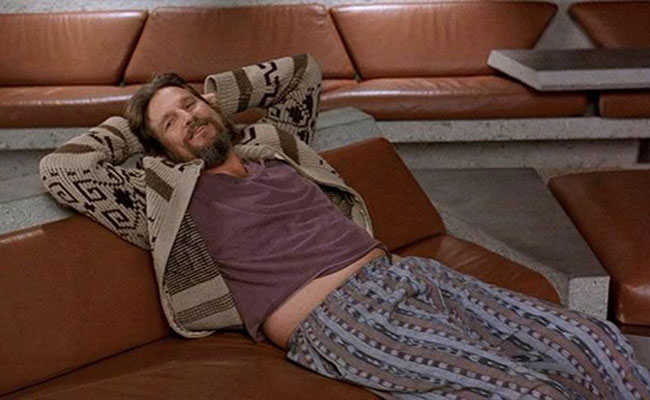
True salvation for the idiot masses could only come, I think, from hippies. From pot-smokers. From this guy:


I think Barthes is right, and it is basically a problem of the bourgeois order that we look at The Dude and think, "he's lazy", instead of thinking "here's a guy who knows how to enjoy life without getting in anybody else's way." Why do we immediately think of his contribution to the economy? He's a spiritual asset. That's worth much much more.

I was reminded of a quote of Orwell's this week: "The quickest way of ending a war is to lose it." We are all, individually, fighting a war for economic growth and a war for "knowledge" and neither of these is serving us particularly well. What we really need is self-acceptance, and pride in failing to meet meaningless and repressive criteria.

It matters because you feel it, not because it gains anybody's approval. If only disapproval wasn't so scary.

Saturday, 15 November 2014

Doubt

My adolescence, which doesn't feel like it's over yet, was characterised chiefly by doubt. First, doubt of everything people were saying around me, and then, overwhelmingly, doubt of myself. Self-doubt has become basic to how I approach life, taking my cue from the scientific method and republican and Marxist humanism.

The flip side of doubt, to my mind, is confidence. In anything. Confidence seems like glorified blind faith, whether it's in a set of beliefs or in your own abilities. It is antithetical to criticism, to commitment to the truth and to authenticity. It is basically superstition, and like most superstitions, basically in service and affirmation of the status quo. Confidence is a guy smiling with two thumbs up and telling you everything is a-okay. But I don't think even he really believes himself.

I feel like I've been carrying with me, almost everywhere, as a sort of alternative to confidence, an all-pervasive ironic detachment. If confidence is religion, irony is the nihilistic overreaction of atheism. It preserves doubt, but to no actual purpose. It's a sort of neutered rebellion, because instead of changing anything it ignores the problem. Together with doubt, it implicitly preserves the basically religious notion of shame in deviance, because the alternative remains unvoiced.

Which got me thinking about a possible truer secular alternative to confidence, which is pride. Pride in doubt. I know pride is a major sin in Christianity, but I think its condemnation is basic to all repressive systems. Pride means not needing outside affirmation. It means you're okay even if you're wrong. It means that you're human and you deserve to be loved. Maybe that's the value of the artistic public exhibition of weaknesses and pain. It's a sad pride parade. It's probably what this blog's about goddammit. Claiming your space without becoming doctrinaire. The same ways gays aren't actually trying to get straight people to sleep with people of their own sex. I would guess all people with an effective religious upbringing have a really hard time getting their heads around that. You express yourself merely to communicate that you rock.

Tuesday, 4 November 2014

Empire of Sadness


We've all heard of sad clowns (aren't they all?), but Nucky Thompson was a sad gangster. If Tony Soprano had moments of remorseful humanity, Nucky never enjoyed his criminal lifestyle in the first place. It's like me and university!

Organised crime is probably a fairly shitty way of pursuing happiness, but it's more than that - Nucky's sadness defines him. It's inextricably tied to his efforts, such as they are, to be good, and to find meaning. Even when he's happy, it's a sad happiness.

Why is sadness so important to him? Why is sadness so imporant in general?

Nucky's into saving people. It's a form of righting wrongs. I suppose that in order to want to help someone, you have to be empathetic and feel their pain. The same is probably true if you want to help yourself.

Thing is, he'd probably be much happier if he just had a good cry, and had less business meetings and more heart-to-hearts. In the final episode, without giving anything away, the audience gets an enormous sense of vindication simply from being allowed to see, without distractions, just how incredibly sad all of this is and always was.

There's also the denunciation of the American dream, which appears to have become a prerequisite for any American TV show these days. Straighten up and fly straight and your life will be fucking miserable. But it's difficult, with this kind of show, to derive any kind of approved, alternative attitude towards life. Except maybe Margaret's, with her refusal to be docile complemented by a wariness of corruption. Which again reminds me of Lisa Simpson, goddammit.

And maybe the bottom line is that it'll never get better than the 20s if we don't acknowledge that they actually sucked.

Saturday, 2 August 2014

Love and Loss


I sort of feel like this movie just changed my life.

It may just be my regular afterglow from watching a movie I really loved. It may be my developing man crush on Steve Coogan, who appears to have a really fantastic taste in screenplays. But, I suspect the reason it got so much under my skin, is that it challenged my conception of grown-upness, by splitting its expression into the representation of two extremely different characters.

Without risk of spoilers, I hope, I think this film can be summarised as the story of a simple, trusting woman, exploited, abused, brainwashed and essentially enslaved by Catholicism in its various institutional and ideological guises, who remains (miraculously?) singularly unrepressed.

Alongside her, we have a world-weary writer. An affluent, successful career-man and intellectual, he is at little risk of himself being crushed under the steamroller of such blind and trusting faith. He is also very clearly basically a teenager.

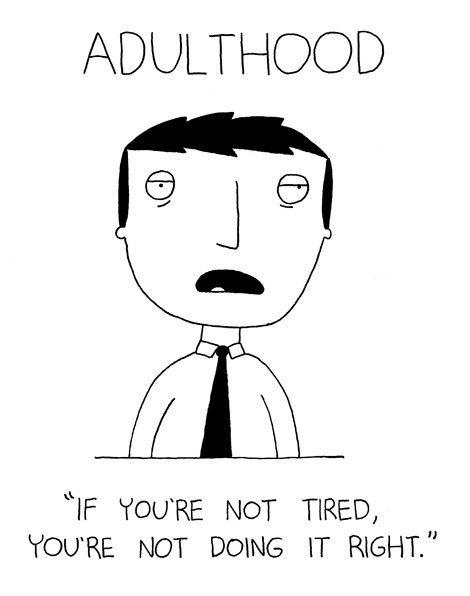
In the hope I can eventually tie all these strands together, I am reminded of this picture that every once in a while I see on facebook:


So which of these three options represents the real adulthood? And how come there are never any straightforwardly inspiring examples? It shouldn't really be worse than childhood or adolescence. Something good's supposed to happen on the way there too.


Here's what I think. Adulthood's about becoming a real person. No more adolescent, contrarian posturing or childish games of pretend. Grown-upness means taking responsibility for who and what you are. It also means accepting who you are no longer - which is to say, loss. Sometimes they can take away your baby. If you can somehow reconcile yourself to that, that probably means you're a real grown-up. I'm pretty sure I couldn't, the way I am at the moment.

Philomena seems authentic. It's a strange adjective to use, despite the fact that this is based on a true story, because movies and their characters can at the most be credible, but she distinctly feels like one of the most authentic people I've ever met despite the fact I've never met her. At the risk of sounding new-agey, she radiates love. Love of others and deep, accepting, love of herself. In a strange, paradoxical, very nearly incomprehensible way, I have to admit that there is something essentially religious about this self-acceptance. If you believe there is a God and this God loves you, that means you're objectively okay. That means you are completely free to be who you are.

But then, of course, there are the evil nuns. Evil nuns are all around us. Otherwise known as arseholes, they're there to exploit your vulnerabilities and weaknesses, and to try and persuade you, directly or through the threat they effectively represent, that you shouldn't be who you are because it's too dangerous. They have ruined religion. They have ruined self-love.

Evil nuns create embittered, frightened secularists like Steve Coogan's writer and myself. They make you wall yourself up to ensure freedom from their imposition, but then all you end up with is freedom to bang your head against a wall. You get stuck in perpetual rebellious adolescence because you can't get yourself to see beyond the fact that people are full of shit. Because you can't forgive.


I think this movie caused a little explosion in my brain when Philomena told Coogan's character that his righteous anger was pointless. Her exact words were "It must be exhausting." And it is. It genuinely boils my blood that you're expected to be perpetually tired in your adult life. I feel like somebody somewhere is trying to take away my baby. It maddens me that people judge you, on any pretext except that of potential harm to other people. I can't stomach it. I don't think I've ever really tried to.

Except I've been broken up with now. So maybe I'm beginning to.

Sunday, 13 July 2014

Weakness

Pretty much every time I see an interview program on the documentary channel, I am forcefully reminded of what seemed like a passing thought I had once, or daydream, of participating in such a program about sufferers of clinical depression. It's actually a pretty scary idea, but I'm reminded of it with a sort of moral urgency, like it's something I really ought to do, one way or another.

I suppose it functions, like every single bloody other thing in my life, as a metaphor for how I conduct myself towards the social world. Clinical depression is a serious illness, and it's important people are aware of it and are tolerant and intelligent towards its sufferers so as not to make it worse, which they easily could, but I've never actually been seriously ill. I've only ever really been seriously weak.

It's a sort of spectrum, which I can never really wrap my head completely around. What people refer to alternately as disinclination to pull yourself together or mental disease includes both an actual illness and what is just a personality type. Maybe a personality type more susceptible to this illness, but I suspect that mostly because of societal intolerance towards it. This personality type, or attribute, I think, is an emotional weakness, the equivalent of being born smaller and physically weaker than average, only invisible.

Only that's probably sort of like defining homosexuality as an inability to be attracted to members of the opposite sex. It may be technically accurate, but it accepts a bunch of arbitrary norms as worthy of deference. Homosexuality is, and especially was, essentially rebellious, subversive, and it's accepted as opposed to just tolerated today not just because we've become more open-minded, but because we've changed our minds about what sex means and what obligations we have in its context. One day we will do the same about emotions.

"Pulling yourself together" isn't just, or possibly at all, an impossibility for me - it also strikes me as incredibly dumb. Or unjustified, at least. I'm also depressed because I won't be repressed. I'm overwhelmed because my emotional reactions impress me and I take them more seriously than my responsibilities as an unattached grown-up. Even if I could pretend to process things the way people around me ostensibly do and we're all expected to, I don't particularly want to. I don't really see the point of such a life, which is where it starts to touch on the disease again.

Homosexuality used to be perceived as, which is to say to constitute, a moral weakness and a personal deficiency. To be a "practicing" homosexual, whether out of the closet or in, meant making your peace with your inferiority, and preferring a sex life to good citizenship. A practicing emotional subversive would prefer an emotional life to seeming respectable. But I still feel closeted.


It's sometimes difficult to tell what characterises just me and what's universal, but it seems to me that the most basic and pervasive human emotion is sadness. Joy comes along every once in a while when something good happens, but there's nothing close to symmetry between the two, and I have felt myself satisfied or happy at the same time as being sad. Sadness is just a reaction to being alive in a confusing and frustrating world.

Sadness means everything's a little too big at the moment, a little too heavy to carry. That you're just one person and the cards appear stacked against you. It means, essentially, that the status-quo is shit. It's not quite the anger that might lead you to try and change it, but it's close.

Grown-ups don't get sad, generally. They get heartbroken, when something's serious enough, or angry or stressed out, but sadness isn't even for pussies, it's for children. It's an admission that you're not grown-up enough to have everything under control, and what you'd really like to do is sit down on the floor and cry. Even if you don't go as far as doing it, you're implying it by giving too direct an indication of sadness. You're saying "This is a heavy load."

I do feel that I get sadder quicker, and deeper, than I'm supposed to. I'm not always so good at recognising it when it happens (though I think I'm getting better!). Generally speaking, nothing feels like it's worth anything before it incorporates sadness within it. All the people being strong and normal enough to be proper adults don't intimidate me so much once I'm into my sad groove. I'm alive and they're dead.

It's an emotional emancipation. If I can allow myself to feel that I'm only a man and what I'm up against is fundamentally too much, at least I have a chance to be free. At least people's friendship can mean something.

Thursday, 3 July 2014

Convention

Convention must be the most insidious form of repression, because it is the most invisible. Strangely enough, my most immediate association with the word is conventional bombing, which is a mind-blowing enough notion in itself. Convention can establish and excuse anything. It is ultimately convention that determines that 2+2=5, civilians may be murdered in masses, or whole peoples kept enslaved.

It also governs social etiquette. It becomes a more or less all-pervasive orthodoxy. You get the secular orthodox, liberal orthodox, easy-going orthodox, masculine orthodox, emotionally orthodox, constructive orthodox - not to mention the various forms of Orthodox orthodox.

I've just seen this film:


For a few weeks now reviewers have been going on about this film - justly, it transpires! - but they keep accidentally describing it as the story of a bunch of bored and unmotivated soldiers. It is in fact the story of a full-blown anarchist in military uniform, and her fight against the repressed repressors around her. It's sort of almost an apolitical film, but its and its protagonist's indifference to politics and army affairs is very strongly and stubbornly felt, the latter going as far as to claim that her sabotaging of army equipment was ideologically motivated. I believe her.

Anarchists. I am reminded of a song by Rage Against the Machine that ends with a seemingly endless repetition of the line "Fuck you I won't do what you tell me". It sort of seems like a silly line by a band with a silly name and a simplistic world-view, but it stuck in my mind. Mindless anarchism feels like as good a response as any to mindless conventionalism. If everybody does what everybody does just because everybody does it, it might be a demonstration of integrity to say "I will not do this, because you expect me to."

It doesn't even matter if the repressors are in the right. Even when obedience is necessary it is soul-and-life-destroying. You're supposed to step out of anarchistic adolescence and into responsible adult obedience, but it's fairly obviously a developmental regression. I really do think that in Israel it happens mostly in the army, and my exemption from it may be why I still feel like an adolescent, but I seem to be trying to convince myself now that is not a bad thing. Better immature than dead inside.

I get irritated with people a lot, but I do believe most of the time they're genuinely trying to do the right thing. That's probably the problem - that they're too convinced that they know what the right thing is. Usually "the right thing" just means "the commonly accepted thing".

I'm not good with the commonly accepted. It tends to bore me and I miss it or forget it. I'm not good with social etiquette. I'm really no fucking good with orthodoxy in any of its guises. It kills me that in some form, to some extent, I have no choice but to accept it. It confuses and unsettles me when I'm reminded that sometimes I actually don't have to. Sometimes boring bullshit can be called out, or dismissed, and they don't take your grown-up badge away. Sometimes they're only pretend rules. My least favourite kind.

Monday, 23 June 2014

Disease and Disability

Says Wikipedia:

"A disease is a particular abnormal, pathological condition that affects part or all of an organism. It is often construed as a medical condition associated with specific symptoms and signs... In humans, "disease" is often used more broadly to refer to any condition that causes paindysfunctiondistresssocial problems, or death to the person afflicted, or similar problems for those in contact with the person. In this broader sense, it sometimes includes injuriesdisabilitiesdisorderssyndromes,infections, isolated symptoms, deviant behaviors..."

Says Wikipedia quoting the World Health Organization:

"Disabilities is an umbrella term, covering impairments, activity limitations, and participation restrictions. An impairment is a problem in body function or structure; an activity limitation is a difficulty encountered by an individual in executing a task or action; while a participation restriction is a problem experienced by an individual in involvement in life situations. Thus, disability is a complex phenomenon, reflecting an interaction between features of a person’s body and features of the society in which he or she lives.."

Interestingly, they also both easily function as insults! Speaking of which,

"A mental disorder, also called a mental illness or psychiatric disorder, is a mental or behavioral pattern or anomaly that causes either suffering or an impaired ability to function in ordinary life (disability), and which is not developmentally or socially normative. Mental disorders are generally defined by a combination of how a person feelsactsthinks or perceives. This may be associated with particular regions or functions of the brain or rest of the nervous system, often in a social context."

That seems to pretty definitively settle it. I am diseased and disabled. It had been easier to ignore this state of affairs before I watched this otherwise only moderately interesting film:


There was a love story going on in this movie, but what I mainly noticed was how clearly diseased and disabled the heroine was, especially, and her attitude towards this fact. Interestingly, even in her failly clear-cut, cancerous case there is a "mental or behavioral pattern or anomaly" which is not "socially normative": She wants to acknowledge the fact that despite being young she will soon be dead, and her surroundings don't particularly want to hear about it.

That really struck a chord. It may well be true that I am less healthy and less capable - or in a word weaker - than the norm or average, but it doesn't mean that my deviation from social norms is somehow explained away. Ostensible empathy and acknowledgement of pain become marginalisations of inconvenient personalities.There there, far away.


What does it really mean for somebody to be sick? That they're sufficiently miserable that it is okay if they don't have the right attitudes and behavious? That they're forgiven? That it's okay that they're losing? Being sick implies something's broken, but what if it can't be fixed? What's the point then? What if it's the social norms that are broken? Why don't you warrant empathy without being "sick"?

Some people just find it more difficult to do things. It's not something they should be made to feel apologetic about. It's certainly not something they should be made to associate with being who they are.

Tuesday, 14 January 2014

The Squeeze

One of the more interesting terms I've come across in my readings for this degree is reification. When used of abstractions it means granting them undue significance and reality. When used of people it means granting them too little. In both cases it involves denying an emotional reality in the name of an ideological agenda.

Reification as thingification of people is a Marxist concept, which would probably lead a lot of people to take it less than seriously. This attitude towards Marxists confuses me sometimes. Today in class we read excerpts of and spoke about Paul Nizan, who is a French communist writer I had never heard of. He was talking about many writers' tendencies to overromanticise the landscapes in their description of foreign lands - to imagine a nature and climate-based edification where there was only a cultural one - where there is always only ever a cultural one. The lecturer was characterising this view as a rather fanatically Marxist one. I said it just sounded like humanism. He said it was a specifically Marxist humanism.

What other kind is there then?

Whether it is bourgeois, bureaucratic, feudal or mob-tribal repression, the shitty thing about being a grown-up is that there are these arbitrary frameworks and pigeonholes where you're expected to fit, and when you don't, instead of making them larger as would be sensible and not idiotic, what's typically done is you are squeezed down and jammed into what is essentially just a glorified, compartmentalised landscape.

The problem, in other words, is that you're not allowed to stretch out. We're here for work, for quotas of whatever, the actual function of which is usually far less important than the perpetuation of its existence, and emotions and personalities and independence just get in the way. It's an idea, usually a fairly stupid one, the self-important earnest perpetuation of which, through a basic obedient inertia, tramples underfoot most actual, human concerns, rendering almost useless historically unprecedented material wealth and political freedom. Jobs, school, sexuality, art - not to mention politics and religion - take important things and turn them into mostly meaningless, pointlessly competitive and suffocating obligations rather than opportunities for self-expression, human connection, and contributions to the community.

But only mostly. It is theoretically possible, and I am told that even empirically verifiable, that some people do manage to stretch out within these arenas, and to successfully ignore their stupider aspects. What is necessary, however, to escape this squeeze, is both space and time, emotional as well as intellectual freedom from people trying to make you less than what you are. You should never respect anybody who demands or expects you to make yourself smaller. Nothing that is worthwhile actually necessitates that.

Saturday, 19 October 2013

Between Independence and Slavery

I'm probably too all over the place at the moment to do this, but here we go.

Basically, emotions are dangerous. They're employed by charlatans to make intelligent people believe in silly narratives, exploited workers admire their abusers, good-natured people hate strangers, citizens love Big Brother. They use our open hearts to rape our brain. Essentially, they make us stupid.

A fantastic way to gain independence, then, is eliminating emotions. But emotions continue to exist no matter what you do and there's no such thing as not being dependent on anyone. What you can have, possibly, is not letting your guard down by the wrong people. This is where I seem to have trouble. Dependence.

Dependence, or emotions, or being a human and not a fucking android, means letting yourself be carried away by things even if they don't make perfect intelligent logical sense. In the end, all analytical, critical intelligence can provide is damage control. It never helped anybody enjoy anything, and anybody who claims it has is fucking lying.

Another word describing being a human and not a fucking android is trust. You can have trust in people, just as you can have faith in institutions and enterprises, which you apparently usually do for completely wrong reasons. I have faith, as it happens, in democracy, human rights, individualism, science, and artistic and spiritual pursuits, among others, but actually trust very few actual people any further than I could throw them, which possibly explains why I seem to trust women slightly more.

The question is, could people really be as dangerous as the really shitty institutions? Is there a person out there as bad as Judaism? Could he possibly hide his shittiness as well as she did? Could his shittifying possibly be as insidious? Are there people out there as inside-out disgusting as racism or fascism? But isn't it racists and fascists in the first place that are responsible for spreading (and insinuating) racism and fascism anyway?

Who's actually dangerous?

Thursday, 4 July 2013

Reification


Conventional anthropological orientalism establishes modern liberal Western superiority in its preference of "guilt-culture" over the superficial shame-culture of all these other traditionally collectivist, conformist, repressed, and all-round silly non-white nations. The West were the only ones to take justice seriously - to ensure that morality was not just a masquerade but an authentic moral commitment.

I'm not even trying to completely refute this claim, but it's interesting to note that Confucius, for one, spoke of cultivating a sense of inner shame, as it were, by meticulous performance of rituals, that was meant to help internalise one's place in the social order, so that deviation from it feels "unnatural", and be abstained from in itself, rather than just held in check when the wrong people were looking.

Alas, it appears that China was not quite up for it. A very messy history followed, even while the elite ostensibly espoused his views. Social mobility was far more extensive than in the West - two peasants, for an extreme example, a thousand years apart, rose to found their own long-lasting dynasties - religious and ideological movements came and went, reforms and criticism of those in power were significant enough to turn China into a source of inspiration for Enlightenment philosophers, civil unrest and war were frequent, and presumably Chinese people were already as loud then as they are now. The meek bunch of pussies Confucius envisioned never really took form, even in China's mid-20th-century semi-totalitarian phase. My thoroughly researched and bloodcurdlingly erudite analysis attributes this to the fact that Chinese culture was essentially and fundamentally anthropocentric. A god never made sense to them as possibly that important, and neither did fucking self-hating guilt.

Enter bourgeois Europe. Destructive as the new order it created was of previous, feudal and docile values - and probably in response to the shockingly naked avarice and brutal exploitation it embraced - there must have risen the new, and in principle quite paradoxical and almost absurd need, for bourgeois respectability. Table manners were instituted, sexual repression intensified, the hoarding of resources became a mark of prestige, smug anti-spiritualism arrived on the scene, the poor began to be condemned for their poverty, the socially deviant newly hospitalised instead of just being kept apart, and gradually, society finally became fertile enough ground for guilt to take firm root, along with the conspicuous consumption invoked to assuage it, and Confucius' vision was finally realised, albeit by primitive Occidentals.

Yes yes, I know, the modern era wasn't all bad. It did bring the industrial revolution which finally allowed people to live longer than 40 years, and democracy which gave people a chance to escape enslavement even if they weren't born rich, but I do want to insist that there was something fundamentally wrong with the idea of programming people into desired behaviour rather than persuading or even intimidating them into it, and that it constitutes an incredibly dangerous process, or ongoing, seemingly inexorable attempt, that was always  going, in some form or another, to aim at turning us into this:


Or, I suppose, into this:


What I am trying to say, in what is probably the most roundabout way I have ever tried to say anything, is that expecting people to be, as opposed to just act the way you want them to, is to expect them to have the properties of a malleable physical object, to mold them by guilt the same way you smelt metal into a more refined version. But human smelting doesn't work - it just burns. It's an insane situation that is a corollary of the insane value system that sees human labour as a resource like coal, to be harvested to the maximum extent and exploited for all that it's worth.

Rules should be something the violation of which scares us, not something we subordinate our very existence and minds to. It is religious repression at its worst. It is Taliban Afghanistan only without burqas and with women behind the steering wheel. But what's the point of being able to drive a car if all you are is a can of baked beans?