I sure wish I knew what it was. This refrainment from doing so is seriously messing me up.
It actually probably won't be you specifically who's the answer to all my troubles, but, as you're here as the elected representative of the Society of People Who Are Not Me, I shall practice communing incoherently with the universe through you. Consider it a sacrifice in the name of science.
Metaphysics. It's definitely got something to do with metaphysics. More specifically with the connotations that the word "metaphysics" has for me, surprisingly jaded considering I spent all my life as a devout Jew and only stopped once I became a devout Taoist. I feel like I ought to explain myself if I say something unscientific. I can kind of see where it came from but not really where it got so intense. I am more than willing to hear this kind of talk but I am terrified of creating it.
I very rarely talk with anybody about anything. Ever since 13 or so, I've moved from being pointedly quiet through being inconspicuously quiet through reciting sentences calculated to get me through conversations with the impression of being friendly all the way to this strange place I'm at now of talking with people truly unfettered, but with a draconian self-censorship so extreme it renders all conversations virtually meaningless.
I am excited about Taoism. The previous sentence is simply not something I can picture myself saying in any context outside this blog and my family. This is an impossible situation. You cannot be timid in your religion, and it is a religion - I'm not even close to kidding.
I've tried to build my confidence in it through a "scientific" examination of its core text that is being delayed for annoying, prosaic reasons, and there's nothing inherently wrong with that, but my adoption of Taoism shouldn't be contingent on my completion of a scientific project - or, more precisely, as the fact is it isn't, regardless of whether this is "wise" or not, I shouldn't pretend that it is, I shouldn't be afraid of saying out loud "I am excited about Taoism". Even "I think you too should become a Taoist". It's not a political statement; nobody's going to get harmed if I'm wrong - the only problem with it is the risk some people will respond in a way I do not consider respectful.
Now, when people show disrespect towards something that is backed up scientifically, it is easy to show to yourself and often to them and anybody else who's watching, what idiots they are. Because stupidity, presumably, invalidates a judgement. We live in a (appropriately, I think) science-worshipping time and culture, so this is comprehensively accepted and so if I prove a person's irrationality I win.
But what's the big deal about winning? I would maintain that maliciousness and narrow-mindedness and arrogance do far more to invalidate an opinion than deviations from scientific standards, even if this view is far less widely held. We all reject what is disrespectful of the scientific method, but what I'm talking about here is disrespect for people. If mocked, I may not be able to conclusively demonstrate that this mockery is the result of misinformation and faulty reasoning and general incompetence, but I can tell the person, or even just myself, that he's being a sack of shit and hasn't got a leg to stand on, because mockery by definition hasn't got a leg to stand on. It's a technique resorted to by infants of all ages when they want to criticise something for whatever reasons and have no actual arguments with which to back themselves up. It's actually a battle you can't lose at, no matter how feeble your metaphysical speculation or remark. It will never be wrong for you to say it, so long as you don't attribute any non-existent scientific value to it.
My eyes are drooping so I'll finish up. I ought to tell you how much and in what ways I am excited about Taoism. I haven't really gotten into it yet, but Taoism is really far less about itself than about people and the world and essentially respect for what exists. I ought to not be held back by scientific assessments of what I want to say. I ought to share with you specific examples and general riffs on life and the universe, instead of examining and explaining why I don't, or at least in addition. I ought to do this all the time and with all people I see of my own volition. Specific examples maybe not, but riffs? We talk about what interests us. If something interests me then it is at least possible it will interest someone else.
I've just gone through a few of my previous posts and it seems I keep revisiting this concept of science-reliance, under different guises. I don't want to be boring, incoherent, pretentious, ridiculous, smug, offensive, unfamiliar, impractical, or generally "wrong". The solution to all of these things is a strict reasonableness, but none of these things is actually a problem. "Smug" and "offensive" come closest, but if I'm expressing excitement about something then these characterisations are simply imagined, mostly by me and possibly also by other owners of overactive imaginations. We'll all have to get over it.
Sorry about this post, but writing these really is good for me.
Thursday, 4 March 2010

Monday, 15 February 2010
Autonomy
My philosophy (pretty much conclusively, actually) is that if you're not busy doing or saying something important, you should be concentrating your efforts on listening, and learning. So I'm always "learning", even when I'm supposed to be busy doing things. And I say things more or less by accident, except for when I force myself to write, like here.
This is going to be one of those tangential posts I warned you about in the title of this blog and in the introductory post but then never really delivered. I am a total mess, and I would like to now try and explore this mess, in as unmethodical a way as possible.
William Wordsworth wrote a poem once. It was called Ruth, about a six-year-old of the same name, and a stanza from it got me focused for a while the other day on what was upsetting me:
"Beneath her father's roof, alone
She seemed to live; her thoughts her own;
Herself her own delight;
Pleased with herself, nor sad, nor gay;
And, passing thus the live-long day,
She grew to woman's height."
I like the fact her whole childhood is spent in this reclusive independence - that she never recovers from the insult (her mother's just died and been replaced); I like the matter-of-fact way in which it's presented. To me she's a heroic figure, a little reminiscent of Vincent (bottom of page) in terms of her blunt unwillingness to "accept" reality at the price of rejecting parts of herself.
Edgar Allan Poe himself (who features prominently in Vincent) seems a very good example of what I'm talking about. His claim to fame was, apparently, his mastery of the recurring themes of the macabre, mystery, and melancholy in his stories. But, read today, his terror tales are quaint, his whodunnits frankly stupid, and his stories of human misery, though not exactly unaffecting, more noteworthy for their general grandiloquence. Or maybe that's just me.
In any case, he gives the distinct impression of a young boy very excited about his ability to use big words, show off his deductive skills and tell scary stories over the campfire with the flashlight half under his chin. In other words, he gives enthusiastic voice to what most of us adults only secretly want to do, both by what he conveys and by what he occupies his time with, much like Vincent, and Ruth.
These people, more often fictional than not, truly inspire me. And the thing is, it's not so obvious that I shouldn't be one of them. I was a prime example of everything this represents until about the age of 14. I had something of a crisis of identity when I discovered that other people and my effect on them are part of what makes me who I am, and have spent most of my time since trying anxiously to make sure I notice people, and their reactions to me, hence the "listening" I mentioned earlier.
But the truth is I can't do it. I don't particularly care about "people". I'm not talking about misanthropy - or I guess if the previous sentence was misread the way I mean I'd actually be implying sociopathy, so not that either - but about the level of attention and place in my heart for the reactions of the anonymous collective, of strangers, of "the general public", of any group. I couldn't give a flying fuck. It's probably inborn. I can't help not giving two shits about facile appraisals of my character and conduct. That's why it never makes any impact no matter how positive and is so extraordinarily simple to deflect when it isn't. It's all just a mental construct, with no impetus of its own, kept alive purely on my stupidity.
The idea behind writing this blog was to inch in the direction of presenting myself - of introducing myself, really - through what makes me who I am rather than what makes me easy for other people to deal with. I think the mistake was in the decision to go in inches. It's not a question of balance, like people keep telling me. You don't divide your life between being alive and pleasing other people. The situations that require outright fakery are rare and extreme. A lot of the time you'll obscure the truth or embellish it because it seems useful to get a certain reaction out of people, but it's almost never something you owe them. You do and say what you want and refrain from doing or saying that which you don't.
Basically, fuck everybody.
This is going to be one of those tangential posts I warned you about in the title of this blog and in the introductory post but then never really delivered. I am a total mess, and I would like to now try and explore this mess, in as unmethodical a way as possible.
William Wordsworth wrote a poem once. It was called Ruth, about a six-year-old of the same name, and a stanza from it got me focused for a while the other day on what was upsetting me:
"Beneath her father's roof, alone
She seemed to live; her thoughts her own;
Herself her own delight;
Pleased with herself, nor sad, nor gay;
And, passing thus the live-long day,
She grew to woman's height."
I like the fact her whole childhood is spent in this reclusive independence - that she never recovers from the insult (her mother's just died and been replaced); I like the matter-of-fact way in which it's presented. To me she's a heroic figure, a little reminiscent of Vincent (bottom of page) in terms of her blunt unwillingness to "accept" reality at the price of rejecting parts of herself.
Edgar Allan Poe himself (who features prominently in Vincent) seems a very good example of what I'm talking about. His claim to fame was, apparently, his mastery of the recurring themes of the macabre, mystery, and melancholy in his stories. But, read today, his terror tales are quaint, his whodunnits frankly stupid, and his stories of human misery, though not exactly unaffecting, more noteworthy for their general grandiloquence. Or maybe that's just me.
In any case, he gives the distinct impression of a young boy very excited about his ability to use big words, show off his deductive skills and tell scary stories over the campfire with the flashlight half under his chin. In other words, he gives enthusiastic voice to what most of us adults only secretly want to do, both by what he conveys and by what he occupies his time with, much like Vincent, and Ruth.
These people, more often fictional than not, truly inspire me. And the thing is, it's not so obvious that I shouldn't be one of them. I was a prime example of everything this represents until about the age of 14. I had something of a crisis of identity when I discovered that other people and my effect on them are part of what makes me who I am, and have spent most of my time since trying anxiously to make sure I notice people, and their reactions to me, hence the "listening" I mentioned earlier.
But the truth is I can't do it. I don't particularly care about "people". I'm not talking about misanthropy - or I guess if the previous sentence was misread the way I mean I'd actually be implying sociopathy, so not that either - but about the level of attention and place in my heart for the reactions of the anonymous collective, of strangers, of "the general public", of any group. I couldn't give a flying fuck. It's probably inborn. I can't help not giving two shits about facile appraisals of my character and conduct. That's why it never makes any impact no matter how positive and is so extraordinarily simple to deflect when it isn't. It's all just a mental construct, with no impetus of its own, kept alive purely on my stupidity.
The idea behind writing this blog was to inch in the direction of presenting myself - of introducing myself, really - through what makes me who I am rather than what makes me easy for other people to deal with. I think the mistake was in the decision to go in inches. It's not a question of balance, like people keep telling me. You don't divide your life between being alive and pleasing other people. The situations that require outright fakery are rare and extreme. A lot of the time you'll obscure the truth or embellish it because it seems useful to get a certain reaction out of people, but it's almost never something you owe them. You do and say what you want and refrain from doing or saying that which you don't.
Basically, fuck everybody.
Saturday, 30 January 2010
A Heart Like the Ocean, Mysterious and Dark
"...You have greatness, she continued, but Mr Ramsay has none of it. He is petty, selfish, vain, egotistical; he is spoilt; he is a tyrant; he wears Mrs. Ramsay to death; but he has what you (she addressed Mr. Bankes) have not; a fiery unworldliness..." - Virginia Woolf's To the Lighthouse.
As you may or may not have noticed, I've been undergoing some form of identity restructuring over the past year or so. I have rejected - completely - Judaism and Zionism and embraced in their stead and as their replacement, as it were, the more universal and humanistic Taoism and democracy.
But something is missing.
Being a part of the Jewish people or the Zionist enterprise means more than just lending your support to a particular hierarchy of values. To use a problematic expression whose dubiousness is probably actually appropriate here, it ennobles you. It gives you a sense of participation in something that transcends space and time; of a metaphysical mission; but it does something more too. Something that the metaphysical missions of Taoism and democracy don't quite suffice for.
Going back a few (okay, many) centuries to the ancient Greek civilisation about which I know remarkably little, we encounter a curious phenomenon.
It's called Greek mythology, though I suppose at the time it was called the history and reality of life among the gods, and no, I'm not about to compare it to monotheistic religion, at least not directly, but to make the point that a civilisation presumably not entirely composed of complete idiots, chose to base their "hierarchy of values" on a system more or less congenitally devoid of both morality and reason.
This argument would be neutralised in the eyes of those who assert that both morality and reason are relative concepts, but I contend that the Greek gods were arseholes by any standards, and doubt that many people anywhere at any time would honestly disagree with me, including the ancient Greeks.
As for reason, it is perhaps less clear-cut, but the fruits of Greek civilisation suggest that they conducted themselves far more responsibly and adultly than their gods did, and in any case, Olympian gods are never exactly made out to be paragons of wisdom, unless I'm forgetting some stories - in stark contrast to, say, the monotheistic God.
So what did the Greek Gods have going for them? The conventional explanation I at least always seem to encounter is that they helped explain away annoying things like natural disasters and bad harvests and military defeats and kept people from going into Woody Allenesque funks over how small and insignificant they were.
That's probably true, but another central aspect of Greek mythology is that the stories are really fucking cool. And not even action-movie, bombastic cool, but an understated, morally ambiguous, film-noir cool. There is an aspect to this cool that is rooted in the unknown - in the irretrievably mysterious, so that the Olympian gods, just like the Abrahamic god, appeal to us not only because of what they explain, but also because of what they render romantically mysterious. They embrace and promote a Something Elseness.
This institution isn't exactly neglected by the secular world, and in fact it's admired, but from afar. It's called art, and normal people dip into its fruits once in a while usually because they feel they ought to or as a means to relax, and sometimes because they missed it and enjoy it for its own sake.
Weird bohemian types spend their whole lives wallowing in it, exploring, pontificating; most importantly creating, even if nobody else ever shows interest or satisfaction in it.
I say "pontificating" dismissively, but that's actually the activity I want to consider here. Exploring or creating is between you and the artist or audience, respectively. Pontificating, or speaking Artsy-Fartsy, or communicating in idiosyncratic emotion, is between you and the people in your life. Your loved or liked or at least acquainted ones, with names and faces that you recognise and mean something to you individually.
Most people respond negatively, with varying degrees of intensity, to Something Elseness, unless it comes in a framework where they were expecting it, like religion or art. Even philosophy usually meets people's resentment. There's an automatic aversion and alarm at this sentiment, possibly to do with the scientific revolution, but I won't get ahead of myself.
People who behave strangely are considered to be behaving wrongly, regardless of the actual effect their behaviour has on people. It is a significant leap to be able to continue in the face of this criticism, which is often superficial and easily forgotten by the criticiser later, but it's a leap you must make if you want to be an independent person, free of arbitrary and harmful allegiances, and have a chance of self-fulfillment and happiness.
This is what I was trying to talk about a few posts back with trying to impose on life your aesthetic sensibilities. I'm beginning to think that it's less in what you do than in what you say, or at least in what you express. If you say something to somebody and they look at you bewildered, that is a positive development. And it is this point that I can't seem to convince myself of or even properly present to other people. I wonder if this signifies a change.
Bob Dylan's album Desire is a great example of this, and probably what first got me thinking about this business way back when. Three of the songs on it (Hurricane and Sara are fairly well known) are his colourful and emotive romanticisations of real people and real events. The one I quoted in the post title isn't, as far as I know, but seems to illustrate my point pretty well, especially when you consider that if the protagonists were real, they'd most probably lead a miserable and monotonous existence.
Have at you:
One More Cup of Coffee (Valley Below)
Your breath is sweet
Your eyes are like two jewels in the sky
Your back is straight your hair is smooth
On the pillow where you lie
But I don't sense affection
Nor gratitude or love
Your loyalty is not to me
But to the stars above
One more cup of coffee for the road
One more cup of coffee 'fore I go.
To the valley below.
Your daddy he's an outlaw
And a wanderer by trade
He'll teach you how to pick and choose
And how to throw the blade
He oversees his kingdom
So no stranger does intrude
His voice it trembles as he calls out
For another plate of food.
One more cup of coffee for the road
One more cup of coffee 'fore I go.
To the valley below.
Your sister sees the future
Like your mama and yourself
You've never learned to read or write
There's no books upon your shelf
And your pleasure knows no limits
Your voice is like a meadowlark
But your heart is like an ocean
Mysterious and dark.
One more cup of coffee for the road
One more cup of coffee 'fore I go.
To the valley below.
As you may or may not have noticed, I've been undergoing some form of identity restructuring over the past year or so. I have rejected - completely - Judaism and Zionism and embraced in their stead and as their replacement, as it were, the more universal and humanistic Taoism and democracy.
But something is missing.
Being a part of the Jewish people or the Zionist enterprise means more than just lending your support to a particular hierarchy of values. To use a problematic expression whose dubiousness is probably actually appropriate here, it ennobles you. It gives you a sense of participation in something that transcends space and time; of a metaphysical mission; but it does something more too. Something that the metaphysical missions of Taoism and democracy don't quite suffice for.
Going back a few (okay, many) centuries to the ancient Greek civilisation about which I know remarkably little, we encounter a curious phenomenon.
It's called Greek mythology, though I suppose at the time it was called the history and reality of life among the gods, and no, I'm not about to compare it to monotheistic religion, at least not directly, but to make the point that a civilisation presumably not entirely composed of complete idiots, chose to base their "hierarchy of values" on a system more or less congenitally devoid of both morality and reason.
This argument would be neutralised in the eyes of those who assert that both morality and reason are relative concepts, but I contend that the Greek gods were arseholes by any standards, and doubt that many people anywhere at any time would honestly disagree with me, including the ancient Greeks.
As for reason, it is perhaps less clear-cut, but the fruits of Greek civilisation suggest that they conducted themselves far more responsibly and adultly than their gods did, and in any case, Olympian gods are never exactly made out to be paragons of wisdom, unless I'm forgetting some stories - in stark contrast to, say, the monotheistic God.
So what did the Greek Gods have going for them? The conventional explanation I at least always seem to encounter is that they helped explain away annoying things like natural disasters and bad harvests and military defeats and kept people from going into Woody Allenesque funks over how small and insignificant they were.
That's probably true, but another central aspect of Greek mythology is that the stories are really fucking cool. And not even action-movie, bombastic cool, but an understated, morally ambiguous, film-noir cool. There is an aspect to this cool that is rooted in the unknown - in the irretrievably mysterious, so that the Olympian gods, just like the Abrahamic god, appeal to us not only because of what they explain, but also because of what they render romantically mysterious. They embrace and promote a Something Elseness.
This institution isn't exactly neglected by the secular world, and in fact it's admired, but from afar. It's called art, and normal people dip into its fruits once in a while usually because they feel they ought to or as a means to relax, and sometimes because they missed it and enjoy it for its own sake.
Weird bohemian types spend their whole lives wallowing in it, exploring, pontificating; most importantly creating, even if nobody else ever shows interest or satisfaction in it.
I say "pontificating" dismissively, but that's actually the activity I want to consider here. Exploring or creating is between you and the artist or audience, respectively. Pontificating, or speaking Artsy-Fartsy, or communicating in idiosyncratic emotion, is between you and the people in your life. Your loved or liked or at least acquainted ones, with names and faces that you recognise and mean something to you individually.
Most people respond negatively, with varying degrees of intensity, to Something Elseness, unless it comes in a framework where they were expecting it, like religion or art. Even philosophy usually meets people's resentment. There's an automatic aversion and alarm at this sentiment, possibly to do with the scientific revolution, but I won't get ahead of myself.
People who behave strangely are considered to be behaving wrongly, regardless of the actual effect their behaviour has on people. It is a significant leap to be able to continue in the face of this criticism, which is often superficial and easily forgotten by the criticiser later, but it's a leap you must make if you want to be an independent person, free of arbitrary and harmful allegiances, and have a chance of self-fulfillment and happiness.
This is what I was trying to talk about a few posts back with trying to impose on life your aesthetic sensibilities. I'm beginning to think that it's less in what you do than in what you say, or at least in what you express. If you say something to somebody and they look at you bewildered, that is a positive development. And it is this point that I can't seem to convince myself of or even properly present to other people. I wonder if this signifies a change.
Bob Dylan's album Desire is a great example of this, and probably what first got me thinking about this business way back when. Three of the songs on it (Hurricane and Sara are fairly well known) are his colourful and emotive romanticisations of real people and real events. The one I quoted in the post title isn't, as far as I know, but seems to illustrate my point pretty well, especially when you consider that if the protagonists were real, they'd most probably lead a miserable and monotonous existence.
Have at you:
One More Cup of Coffee (Valley Below)
Your breath is sweet
Your eyes are like two jewels in the sky
Your back is straight your hair is smooth
On the pillow where you lie
But I don't sense affection
Nor gratitude or love
Your loyalty is not to me
But to the stars above
One more cup of coffee for the road
One more cup of coffee 'fore I go.
To the valley below.
Your daddy he's an outlaw
And a wanderer by trade
He'll teach you how to pick and choose
And how to throw the blade
He oversees his kingdom
So no stranger does intrude
His voice it trembles as he calls out
For another plate of food.
One more cup of coffee for the road
One more cup of coffee 'fore I go.
To the valley below.
Your sister sees the future
Like your mama and yourself
You've never learned to read or write
There's no books upon your shelf
And your pleasure knows no limits
Your voice is like a meadowlark
But your heart is like an ocean
Mysterious and dark.
One more cup of coffee for the road
One more cup of coffee 'fore I go.
To the valley below.
Wednesday, 20 January 2010
A Short Summary of the Tao Te Ching: Introduction
My reading journey culminating in the Tao Te Ching started with Salinger's "Raise High the Roof Beam, Carpenters and Seymour: an Introduction", and continued through "Zen and the Art of Motorcycle Maintenance" and the "Tao of Pooh". I mention this journey because I consider it a gratifyingly successful one. The first two aren't the easiest reads, but the third certainly is, and they're all inexpressibly awesome.
This journey effectively actually began with "Catcher in the Rye", and the continuation of it seems so obvious and feels so fulfilling that I would be remiss if I were not to make this futile appeal to you and beg that, if you enjoyed "Catcher", you read at least one of these books, please please please please please.
Now that that's out of the way, I'm here to talk about the ancient Chinese text that is the foundation of the Taoist philosophy. Taoism is sometimes called a religion, but it is absent the exclusivist nature of Western religions, and therefore it seems to me a bit misguided to use that word, at least in a Western context like this.
It is true, however, that Taoism professes to be a comprehensive and all-encompassing view of the world (the idea is that every other positive notion can merge into it) and implies a need for a religious level of devotion - not in terms of promotion and protection from perceived threats, but in terms of personally, individually being deeply committed to following its suggestions.

It was with this in mind that I studied the Tao Te Ching. The original text is over 2000 years old in a notoriously ambiguous language and even back then was poetic in a rather abstruse way, so when you approach the translation with anything beyond simply recreational intentions, you have to study it in order to avoid being merely spoon-fed the particular translator's personal interpretation.
How does one do this? Well, I got me a translation that seemed a happy medium between the fiercely personal and distortive interpretation and the virtually meaningless literal and detached translation of a foreign text both ancient and poetic.
It's only 81 chapters (each chapter constituting one page) long, but in the ten months since I'd begun reading it I've only gone over it three or four times, trying to study it slowly the way a religious text is studied, and working at distilling my immediate impressions of it, trying to avoid rationalisations meant to squeeze it into what are conventional and familiar attitudes to me.
It's still, doubtless, a deeply personal interpretation, but the idea was to infer the meaning of it through its spirit, which is a major principle of Taoism itself.
Taoism insists on its being a practical philosophy with day-to-day implications, so it's a little bit problematic that its founding text is so vague and mild in its dictums. There is of course an enormous body of learning concerning this book that has developed over the many centuries since, but it was my impression that the author intended for the readers to individually determine the practical expressions of these general principles, and in any case I don't automatically trust centuries-worths of a faceless host of "prestigious" interpreters. I'd have a go at them later, but first I needed to figure out what my own understanding of the Tao Te Ching was.
So I'd decided, quite a while ago, that I'll summarise, in my own words, what it means to me, on this blog. I have concentrated a lot of effort on this more than a little presumptuous task, and as I complete it, through the coming posts, I expect to present to myself an at least partial guide on how to fulfill the teachings of the Tao Te Ching in my day-to-day life. Once this happens I can comfortably call myself a Taoist. Which will probably be expressed mainly by changing my religious status on Facebook, but who knows, maybe it will effect a profound improvement in the quality of my life. I suppose it can be part of my identity even if I don't actively proselytise, though I should probably do that as well.
So there you go. A whole post without actually saying anything. You only have yourself to blame, really. The word "introduction" in the title was a dead giveaway.
Perhaps you will forgive me if I present to you one of the greatest songs in the history of the universe:
This journey effectively actually began with "Catcher in the Rye", and the continuation of it seems so obvious and feels so fulfilling that I would be remiss if I were not to make this futile appeal to you and beg that, if you enjoyed "Catcher", you read at least one of these books, please please please please please.
Now that that's out of the way, I'm here to talk about the ancient Chinese text that is the foundation of the Taoist philosophy. Taoism is sometimes called a religion, but it is absent the exclusivist nature of Western religions, and therefore it seems to me a bit misguided to use that word, at least in a Western context like this.
It is true, however, that Taoism professes to be a comprehensive and all-encompassing view of the world (the idea is that every other positive notion can merge into it) and implies a need for a religious level of devotion - not in terms of promotion and protection from perceived threats, but in terms of personally, individually being deeply committed to following its suggestions.
It was with this in mind that I studied the Tao Te Ching. The original text is over 2000 years old in a notoriously ambiguous language and even back then was poetic in a rather abstruse way, so when you approach the translation with anything beyond simply recreational intentions, you have to study it in order to avoid being merely spoon-fed the particular translator's personal interpretation.
How does one do this? Well, I got me a translation that seemed a happy medium between the fiercely personal and distortive interpretation and the virtually meaningless literal and detached translation of a foreign text both ancient and poetic.
It's only 81 chapters (each chapter constituting one page) long, but in the ten months since I'd begun reading it I've only gone over it three or four times, trying to study it slowly the way a religious text is studied, and working at distilling my immediate impressions of it, trying to avoid rationalisations meant to squeeze it into what are conventional and familiar attitudes to me.
It's still, doubtless, a deeply personal interpretation, but the idea was to infer the meaning of it through its spirit, which is a major principle of Taoism itself.
Taoism insists on its being a practical philosophy with day-to-day implications, so it's a little bit problematic that its founding text is so vague and mild in its dictums. There is of course an enormous body of learning concerning this book that has developed over the many centuries since, but it was my impression that the author intended for the readers to individually determine the practical expressions of these general principles, and in any case I don't automatically trust centuries-worths of a faceless host of "prestigious" interpreters. I'd have a go at them later, but first I needed to figure out what my own understanding of the Tao Te Ching was.
So I'd decided, quite a while ago, that I'll summarise, in my own words, what it means to me, on this blog. I have concentrated a lot of effort on this more than a little presumptuous task, and as I complete it, through the coming posts, I expect to present to myself an at least partial guide on how to fulfill the teachings of the Tao Te Ching in my day-to-day life. Once this happens I can comfortably call myself a Taoist. Which will probably be expressed mainly by changing my religious status on Facebook, but who knows, maybe it will effect a profound improvement in the quality of my life. I suppose it can be part of my identity even if I don't actively proselytise, though I should probably do that as well.
So there you go. A whole post without actually saying anything. You only have yourself to blame, really. The word "introduction" in the title was a dead giveaway.
Perhaps you will forgive me if I present to you one of the greatest songs in the history of the universe:
Monday, 28 December 2009
Image
This is sort of new. I'm restless, so I'm trying to write it out to get myself back together, rather than with a real idea of what I want to say. The newness is that it's going to the blog rather than to another of my overwritten notebooks.
I was speaking to a friend yesterday, about the usual topic - individualism vs. others' perceptions and expectations - and at one point, presumably when I was beginning to bore him, he said "I reckon you just choose a personality and stick to it."
Which I thought then was a kind of bland "stay true to yourself" statement - because how can you "choose" a personality? You only have one in the first place - but later what I thought he meant (and it doesn't even matter if he didn't because it's an interesting thought) was that you choose an image and cultivate it exclusively.
This is a very new concept to me because pretty much since I remember myself I've been in denial of the fact that my image - people's perception of me - matters to me. It always felt like an affront to my indepedence; "What do you mean I need people to approve of me? No I don't!"
And I'm still not sure I do, but if I care about people at all, I care about their relationship to me, and if I care about their relationship to me, I need their perception of me to be representative, even if it can never be %100 accurate. I need to be recognised, in both senses of the word.
And I think, or I guess agree, finally, that this effort to represent yourself needs to be, if not exactly engineered, then deliberate. You have to stop and ask yourself "how am I being perceived by people right now?" which is an idea I still find deterrent, but which I think I'll need to try and get used to. The idea is to exaggerate your own characteristics, as it were, so as to both facilitate your relationships with people and strengthen your sense of identity. If people knew, for example, how embarrassingly much I loved Neil Young, this would make me an immeasurably healthier and happier person. And this is probably news to nobody but myself, but I'm still having trouble swallowing the concept.
In relation to this, or possibly not, I noticed today - or it bothered me today - that I have no professional pride, and no professional excitement. It is true, of course, that I am not exactly a professional, but even just the other guys in the apartment, who are also only doing one or two years of qualification-less national service, seem very anxious to do what they're doing well, because - I think - they perceive their work as being part of who they are, which kind of makes sense, considering that it is completely fucking voluntary.
It's not even true to say that I'm bored at work. I've been finding it very intriguing, but I feel more like a passive observer of a sociological experiment (it's a kindergarten) than an active participant, even when I'm actively participating.
It's to do with considering what I do with people as separate from me. The work I'm doing is terrible? Okay, it's just work I happen to be doing - it couldn't possibly say anything about me as a worker. I'm as good a worker as I feel I am. Sure.
Your image is the rubber of the balloon. While it is true that it's mainly about the air, if there's no rubber to contain it then it's kind of a futile exercise. Just walking around breathing on people isn't nearly as pleasant. The air is the content, but the fact that you choose to pack it inside of the rubber is what tells the person you're giving it to that you love them. It's like the gift and the gift package. Saying it's only about the gift is kind of cold.
If you care about people then you owe it to them to attribute meaning to your interactions with them, and to consider who you are with them who you are as a person. It's not about trying to impress them. It's about respecting them enough to recognise them as part of your life. It's not about what they say or even think about you; it's about how they experience you. Less good/bad than real/fake.
And after so much inane babble, you deserve some Neil Young.
I was speaking to a friend yesterday, about the usual topic - individualism vs. others' perceptions and expectations - and at one point, presumably when I was beginning to bore him, he said "I reckon you just choose a personality and stick to it."
Which I thought then was a kind of bland "stay true to yourself" statement - because how can you "choose" a personality? You only have one in the first place - but later what I thought he meant (and it doesn't even matter if he didn't because it's an interesting thought) was that you choose an image and cultivate it exclusively.
This is a very new concept to me because pretty much since I remember myself I've been in denial of the fact that my image - people's perception of me - matters to me. It always felt like an affront to my indepedence; "What do you mean I need people to approve of me? No I don't!"
And I'm still not sure I do, but if I care about people at all, I care about their relationship to me, and if I care about their relationship to me, I need their perception of me to be representative, even if it can never be %100 accurate. I need to be recognised, in both senses of the word.
And I think, or I guess agree, finally, that this effort to represent yourself needs to be, if not exactly engineered, then deliberate. You have to stop and ask yourself "how am I being perceived by people right now?" which is an idea I still find deterrent, but which I think I'll need to try and get used to. The idea is to exaggerate your own characteristics, as it were, so as to both facilitate your relationships with people and strengthen your sense of identity. If people knew, for example, how embarrassingly much I loved Neil Young, this would make me an immeasurably healthier and happier person. And this is probably news to nobody but myself, but I'm still having trouble swallowing the concept.
In relation to this, or possibly not, I noticed today - or it bothered me today - that I have no professional pride, and no professional excitement. It is true, of course, that I am not exactly a professional, but even just the other guys in the apartment, who are also only doing one or two years of qualification-less national service, seem very anxious to do what they're doing well, because - I think - they perceive their work as being part of who they are, which kind of makes sense, considering that it is completely fucking voluntary.
It's not even true to say that I'm bored at work. I've been finding it very intriguing, but I feel more like a passive observer of a sociological experiment (it's a kindergarten) than an active participant, even when I'm actively participating.
It's to do with considering what I do with people as separate from me. The work I'm doing is terrible? Okay, it's just work I happen to be doing - it couldn't possibly say anything about me as a worker. I'm as good a worker as I feel I am. Sure.
Your image is the rubber of the balloon. While it is true that it's mainly about the air, if there's no rubber to contain it then it's kind of a futile exercise. Just walking around breathing on people isn't nearly as pleasant. The air is the content, but the fact that you choose to pack it inside of the rubber is what tells the person you're giving it to that you love them. It's like the gift and the gift package. Saying it's only about the gift is kind of cold.
If you care about people then you owe it to them to attribute meaning to your interactions with them, and to consider who you are with them who you are as a person. It's not about trying to impress them. It's about respecting them enough to recognise them as part of your life. It's not about what they say or even think about you; it's about how they experience you. Less good/bad than real/fake.
And after so much inane babble, you deserve some Neil Young.
Saturday, 26 December 2009
Balloons

^ A balloon.
So I've been thinking about balloons. Life seems to effectively be about giving and receiving balloons. You take who you are, blow it into a balloon, tie it up, and give it to somebody else to add to his collection, so that we're all walking around with scores of balloons above our heads, holding them with strings, which I guess would now make them helium balloons, but the image still works for me.
The problem with handing somebody a balloon containing yourself, is that there's no guarantee he won't take a pin out and pop it. There's nothing protecting it except a thin layer of rubber, and there's nothing supporting it - the very essence of our relationship with people - except for what has to honestly be described as hot air. It survives entirely on good faith and a common willingness to accept what is essentially a virtual reality.
These balloons only support a civilisation so long as the civilisation chooses to respect their integrity - not only by not popping them, but by treating them as if they have a say, as if they have weight and authority.
I'm very good - way better than average - at receiving balloons. I'm even very good at making them. But I'm not very good at tying them up and handing them to other people.
This raises the question, which I'll try to address fairly briefly, of whether it is about the giving or about the receiving of the balloons.
Obviously it's about both, but I think they serve very important but distinct purposes.
When you receive a balloon, at least if you're properly alive like a child, you get excited. You're moved and grateful and jumping up and down in a frenzy.
When you give a balloon, or, more precisely, when you're in the constant habit of handing out balloons, your life is imbued with a sense of meaning, because you are actively contributing to what life is about.
One is about joy, and the other is about happiness - that is to say, one about visceral rushes and violent aliveness, the other about a quietly glowing contentment. Thrills and satisfaction.
I'm not sure I can say it's more important, but you definitely need the second as a basis upon which to make the first meaningful. There's no use in enjoying things if you never have a second of inner peace. This might explain why I and similarly oriented people sometimes surprise people when we say we're deeply depressed, despite what is an outwardly - and genuinely - joyful appearance much of the time. We're just not giving out enough balloons.
The specific problem with my prospective balloons is that the air that would fill them is an unusual blend of anxiety, righteous rage, blathery metaphysics, and directer proclamations of love than people are used to.
What happens is this: I'll begin blowing up a balloon, stop to sneak a look at the intended recipient, decide he doesn't look receptive enough, and release my hold on the balloon, letting the rubber fly randomly away, pretending it only ever got to my mouth by accident.
Alternatively, and recently, I'll be almost completely out of air, but decide I ought to give people balloons anyway. So I'll dutifully take a balloon, drench its insides with spittle and phlegm, somehow manage to tie it closed, and hand the dilapidated, disgusting wet chunk of rubber to whoever it is, who'll usually take it anyway. But it's not a balloon, and would only look like a balloon if you were willfully ignoring the evidence of your senses and using a very selective and frankly idiotic definition of the concept. It's about the air, not the rubber.
The solution is to be less fearful, and then obviously less compensatingly frantic. Only arseholes pop balloons, and these are less common than people'd have you think. And even those who aren't trustworthy in this respect, aren't likely to mistakenly strike you as trustworthy. If somebody seems worthy of your balloon, you just give it to him. At worst, he'll just politely and bemusedly add it to his collection, without fully appreciating the significance of your gift. But he's not going to spit in your face.
So happy ballooning.
As a side note, this is the first blog entry, and piece of writing in general, to be (partly) written on Shabbat, so I reckon I deserve some kind of congratulations, so here I am giving them. I'm not sure how to explain it, but this is an important act of unshackling and reprioritisation. Writing, specifically.
Saturday, 19 December 2009
Restatement of Mission
Which, wow, after almost five months of blog silence has probably been quite a long time coming.
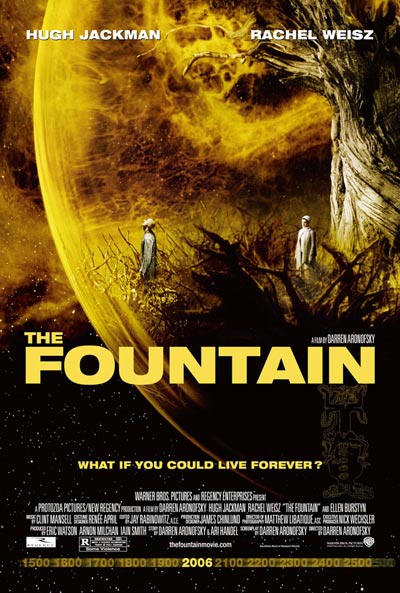
I'm not going to go into it except to mention that you should watch it, as if you're going to listen. It is, as the poster and tagline imply, about life and death and trees and a bald guy floating around in space.
I was watching it today for something like the fifth time since it came out, and it didn't shake my world as much as it had some of those previous times, except for what I later understood to be the surprisingly novel sensation of giving serious consideration to metaphysical issues.
My mind has been occupied, when it in fact had been occupied, by moral issues instead. It had and still does disturb me how ignorant people are of the moral consequences of their general complacency.
I do still mean what I said a few posts and more months back about our collective thinking being hijacked by self-impelling institutions like nationalism, orthodoxism, and fascism (as expressed by adoration for the strong and contempt for the weak - a trait very prominent in capitalism, for one).
People have a general tendency to accept that what serves the nation, custom, or unrestrained enterprise is good, without pausing long enough to consider who this kind of thinking serves and who it causes untold suffering to.
So I've been trying very hard to keep my mind clean of this, and it's even managed to spill a little into my behaviour and conversation, but what I've only noticed now is that it appears to have taken over the whole of the area of my brain devoted to "serious issues" and to have pushed out almost all of my previous musings about spirit and beauty and love and emotion almost clean out.
I stopped being religious close to a year ago now, essentially because of the moral issues I occasionally try to explain here. Its spiritual aspect seemed genuine but not exclusive enough to itself to warrant the intellectual subjugation that it by definition demands. So I'm left now with a fragile but sincere and workable moral framework in its stead, but almost none of the presumedly much easier to get hold of spiritual take on the world.
Because I haven't been looking. It's difficult to speak (or even think) metaphysical mumbo jumbo without having a very rich religious tradition backing you up. The fact is, on this subject, you are always blowing up a bubble. You can be made to feel comfortable inside it if other, "respectable" people have tried to blow it up before you, but otherwise, I guess you just have to feel less comfortable inside it.
Or you could try to find more about the non-denominationally affiliated people whose work you're continuing. I'm not the first secular man or even just non-frothingly-exclusivist-Jew (Rav Kook comes to mind) to take the issue of spirit seriously. So I guess I'm setting myself some rather vague reading assignments, as well as reminding myself to write here more often and allow and actively encourage myself to think seriously too about matters not involving morality and nefarious forces' relentless scramble for my brain.
Neil Young is not really relevant to any of this but he is awesome, so have a song:
I've just seen this film:
I'm not going to go into it except to mention that you should watch it, as if you're going to listen. It is, as the poster and tagline imply, about life and death and trees and a bald guy floating around in space.
I was watching it today for something like the fifth time since it came out, and it didn't shake my world as much as it had some of those previous times, except for what I later understood to be the surprisingly novel sensation of giving serious consideration to metaphysical issues.
My mind has been occupied, when it in fact had been occupied, by moral issues instead. It had and still does disturb me how ignorant people are of the moral consequences of their general complacency.
I do still mean what I said a few posts and more months back about our collective thinking being hijacked by self-impelling institutions like nationalism, orthodoxism, and fascism (as expressed by adoration for the strong and contempt for the weak - a trait very prominent in capitalism, for one).
People have a general tendency to accept that what serves the nation, custom, or unrestrained enterprise is good, without pausing long enough to consider who this kind of thinking serves and who it causes untold suffering to.
So I've been trying very hard to keep my mind clean of this, and it's even managed to spill a little into my behaviour and conversation, but what I've only noticed now is that it appears to have taken over the whole of the area of my brain devoted to "serious issues" and to have pushed out almost all of my previous musings about spirit and beauty and love and emotion almost clean out.
I stopped being religious close to a year ago now, essentially because of the moral issues I occasionally try to explain here. Its spiritual aspect seemed genuine but not exclusive enough to itself to warrant the intellectual subjugation that it by definition demands. So I'm left now with a fragile but sincere and workable moral framework in its stead, but almost none of the presumedly much easier to get hold of spiritual take on the world.
Because I haven't been looking. It's difficult to speak (or even think) metaphysical mumbo jumbo without having a very rich religious tradition backing you up. The fact is, on this subject, you are always blowing up a bubble. You can be made to feel comfortable inside it if other, "respectable" people have tried to blow it up before you, but otherwise, I guess you just have to feel less comfortable inside it.
Or you could try to find more about the non-denominationally affiliated people whose work you're continuing. I'm not the first secular man or even just non-frothingly-exclusivist-Jew (Rav Kook comes to mind) to take the issue of spirit seriously. So I guess I'm setting myself some rather vague reading assignments, as well as reminding myself to write here more often and allow and actively encourage myself to think seriously too about matters not involving morality and nefarious forces' relentless scramble for my brain.
Neil Young is not really relevant to any of this but he is awesome, so have a song:
Subscribe to:
Posts (Atom)